I wasn’t sure whether to write about this or not. Religion is extremely personal and has been the centre of a number of heated and unpleasant debate over the last decade in particular. With that in mind, I would first of all like to say that this is my own personal experience and so I do not claim to speak for anyone, nor do I invalidate the beliefs of others. I say that not out of fear of criticism but because so many people who do not have faith belittle those with it. Not everyone, not even most, but too many, even out of the people that I know.
I think I am an atheist. I say that because, despite having no concrete belief in a deity, I enjoy and respect religion. But sometimes, I feel very vehemently against organised religion, its doctrines and how it has shaped the world as we see it today. Sometimes I want to believe in God. Sometimes I even pray and feel as though I am not alone. I feel that prickly feeling of euphoria in a church that a lot of people report as the presence of God. I have a fairly complicated relationship with faith that has spanned most of my life, although I only realise that now, in retrospect.
As a lot of people in country communities do, I went to a church school from nursery through to sixth form. This is what started off my experience with religion, but purely from a Christianity standpoint. Although we learnt – briefly and in unflattering terms of foreignness and ‘difference from us’ – about other religions, namely Islam and Buddhism (don’t ask me why only those two, I have no idea!) we learnt very little about what they are about, practically. Instead, we learnt an all-encompassing ‘Muslims believe this’ or ‘Buddhists do this’. I did not even know about there being two major schools of Islam until the age of 13.
We went to church every term to celebrate Harvest (rinsed of its Pagan origins, of course), Christmas, Easter, Ascension and Year 6 Leavers Day. A strange mix, then. Three days a week, we sat in our largest classroom (for this was a school without a hall or dining room for pupils to gather) and sang from the Come and Praise volume 1 hymn book. We lit the candles and did the nativity and prayed before lunch. At the tender age of eleven, I didn’t really consider whether I actually believed what I was saying and doing every day, but I was about to start.
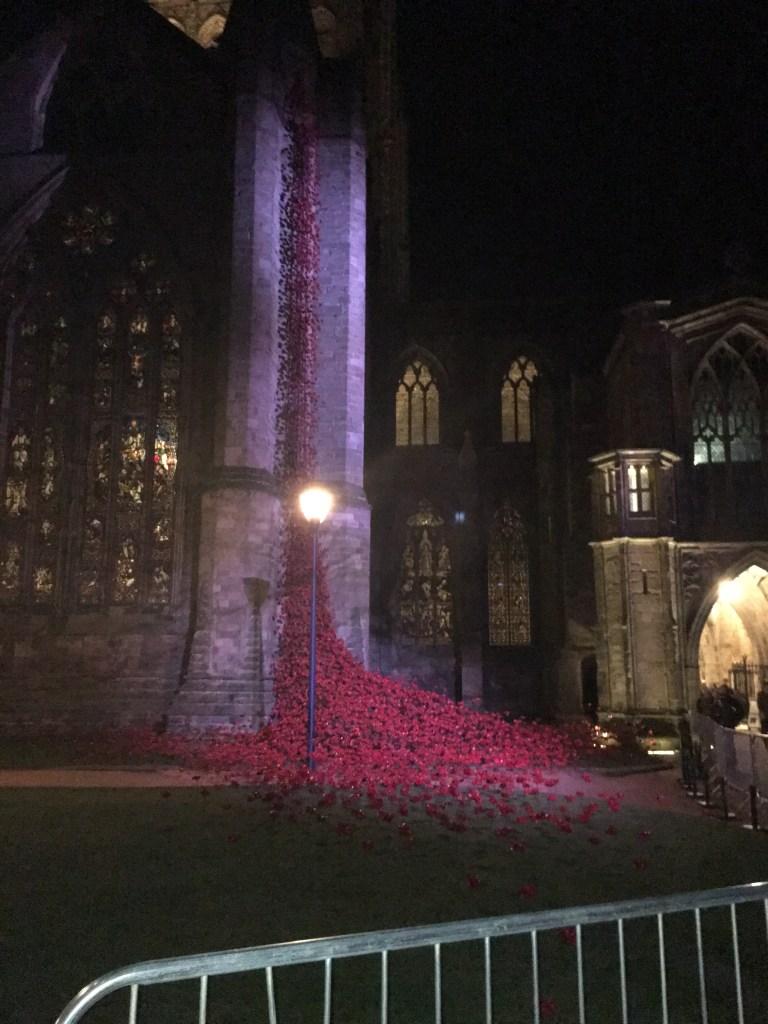
If I had thought that a church primary school was a solid grounding in religious education, I was wrong. I started at our local cathedral school in 2011 and began attending church – granted, it was compulsory – three to four times a week, along with Christmas. Easter, Remembrance, termly Eucharist and services to welcome new pupils, say goodbye to old ones and to celebrate the end of term. And I loved it. In 2014, I joined the choir and began to sing – in Latin, of all things – twice a week about loving and praising a God that I still wasn’t sure I believed in. I slowly stopped going up to receive a blessing at Eucharist and joined the school’s vehemently secular LGBTQ society (which I would like to return to later on), I denounced blind faith. But at the same time, I explored my own faith, felt joy and peace in church and in hymns, and sang at St Paul’s cathedral four times as part of a guest Eucharist choir. I was a girl divided.
It is at this point that I should mention that I had been praying every night since the age of eight. When my grandfather died, I tried to pray to connect with him at first, but his death triggered something in me that I now know is a symptom of Obsessive-Compulsive Disorder, but at that point, was just repetitive prayer. I said the same words every night and it didn’t occur to me until years later that I was saying them, not to commune with God, but to stave off faceless disaster for another day. This is where my relationship with faith become more complicated. I had realised that there was a very human reason for my prayer and that I did not believe I was communicating with the divine at all.
For a while after that, I researched many different religions. I suppose I was the classic ‘searching for meaning’ case. It didn’t feel that way, though, because I think I knew that I wasn’t going to find belief anywhere that was the work of Darwin and Hawking. But I have read the Bible, the Qu’ran, the Talmud, the Vedas, to see what speak to me. I found great solidarity in reading Life of Pi.
But the one that stands out for me is wicca. Now, many people are alarmed when they hear this word, for they see malicious witchcraft being used for unspeakable evil. They feel ridiculous even entertaining the notion. But I asked myself why this, among all relgions and beliefs, should be seen as so far-fetched. Is it because it professes that the power lies with the individual rather than the deity – or rather, that it can lie with both (witchcraft, which I know less about, is not necessarily a religion as wicca is, with a deity)? That is incorporates feminine power? That they imagine people running around shouting Harry Potter spells in the woods?
I don’t know. And the more I researched, the more I felt a connection with it. Now, you cannot make yourself believe anything, and I could not make myself believe in a Triple Goddess any more than I could believe in God. But where I see comfort in Pagan religions is that they find power – not necessarily magical or divine power – in nature, in the self and in caring for yourself and your surroundings. There is an element of self-care and self-belief that is missing from my experience of other religions, whilst maintaining the respect for others and the Earth. I think that is what I took away the most from my foray into religion.
There are times when I want to believe in God. And at those times, I still pray, I still try to feel the presence of something else because it is comforting. There are times when I think, to my eternal surprise, that I might be a Christian. And others when I feel the teachings of the Christian church – the Church of England, Anglican, I mean, to narrow it down – cannot possibly fit into what I believe and who I am.
On that last note, I would now like to return to the LGBTQ society that I joined at school that rejected the school’s conservative and Christian message. Obviously, as a school and therefore a safe place for all students, it wasn’t allowed to not let us set up the society, nor were its teachers allowed to profess an anti-gay stance. However, many of us got the sense that this stance was held by a number of staff and some pupils – more so for fear of upsetting the conservative parents than for any actual anti-gay sentiments. I have always been told that religion and being a lesbian are at odds with each other and you cannot have them both. But I fail to see why this has to be the case. I fail to see why sweeping statements have to be made that a certain religion is against women, or vaccines, or immigration. There is nuance to religion and, even on a personal level, that belief does not stop people from making their own decisions.
So, I would like to end on that thought. I have experienced religion for most of my life and found it a comforting constant that I just cannot be a consistent part of. Doubt and exploration is such a valuable tool in strengthening faith and finding out where you stand. It does not have to be one thing or the other, there are so many religions and sects or denominations of the same religion. I find that faith or an interest in faith can exist on their own, without an organised religion attached to it.
Don’t be afraid to explore what you believe. It may take some time but it is an interesting journey and, at the least, you will understand the world and others better.
 Read With Me