I had a blog a long time ago but I mostly posted drawing I’d done, in pen, on lined paper, of cartoon characters so I decided to give this another go with something a bit more ‘me’ this time!
I’ll be trying to update fairly often, but, for now, add me on:
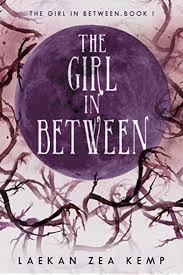
I haven’t finished this book. I will admit that now, I didn’t finish this book, but not because it wasn’t good. It is good, and parts of it are unique. Now, I would never normally review books that I haven’t finished, but I think that I owe this novel a review. It is more complicated than simply ‘didn’t like, didn’t finish’. Laekan Zea Kemp’s novel is quite something, but it wasn’t for me. I think my issue with it was that I’m not the biggest fan of fantasy set in the real world, and that I could sort of see where it was going. And by that, I don’t meant the overarching plot, but individual bits like the boy in her dreams, I guessed where that was going.
front cover of book 1
The Girl in Between tells the story of Bryn (it means ‘hill’ in Welsh – I hope you know where I got that from!) a teenage girl living with Klein-Levin Syndrome, an illness that causes lengthy periods of sleep, as well as memory problems and excessive eating. She dreams, unusually for KLS patients, during her episodes. There, she meets a nameless boy who knows he does not belong there but cannot figure out why he is there or where his own world is. Slowly, his memory returns and he finds out where he came from. This is as far as I got, but I found that I didn’t really care what was coming. What this novel fails at is not plotting, or characterization, or writing style. It is pacing, I think. I cannot quite describe why I didn’t want to finish it, because I was enjoying it. But I didn’t enjoy it enough to want to know where the story was going. Don’t get me wrong, I am curious what happens, but there is too much filler in the first half for me to warrant moving on to the second.
The characters are sometimes flat, but Bryn is entertaining and it is rare and interesting to see a character with a chronic illness. What I am worried about is that her illness will not be an illness at all – a la Everything, Everything – but some sort of supernatural occurrence. Nevertheless, she is compelling, funny and her relationships are interesting. However, the rest of the characters, in particular Dani and Drew, are not nearly as good, mostly acting as stock characters that I had little interest in finding out more about. Dani’s love interest is both hard-done-by and whining, the boy in her dreams rude and perpetually confused. There is just not enough to recommend it immediately enough for me.
Perhaps I didn’t give this book enough of a chance. I cannot quite describe the feeling that I had when I decided to stop reading (it was quite profound for a YA fantasy novel if I’m honest). It wasn’t dislike of the novel, it was lack of excitement and, although I was interested to find out the story behind the dreams, I wasn’t invested enough in the rest of the story to finish the novel. Or, there was too much of the rest of the novel and not enough of the main plot.
Please feel free to tweet me about this – if you think I gave up too quickly, let me know! @CharlotteGoodg2
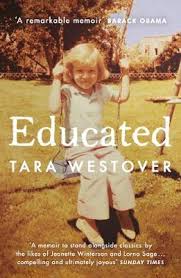
Popular non-fiction is not something that I read often. Perhaps it’s because I have very niche interests when it comes to non-fiction or whether I just prefer fiction, but this book got really popular when it first came out, so I bought a copy. It sat on my shelf for a year and I finished it just last month. It is rare of me to be gripped by creative non-fiction, but I read this in three sittings and each time I was loathed to put it down. Tara Westover writes frankly about her experiences and is not afraid of the ‘transformative power of education’ that is the focus of the book.
The concept of the book is this: Tara Westover, the youngest child of the Westover family of Utah, is born to a Mormon father and mother who reject the government, medicine and ‘gentiles’, including other members of their faith. Her father has spent much of his life prepping for the Second Coming of Jesus and the accompanying end of days. Her mother is a midwife and herbalist healer. Her brothers work on her father’s scrapyard at the base of the mountain where they built their home. At the point at which she goes to Brigham Young University (BYU) aged 17, she has never had a formal education, and her birth certificate had only been issued eight years previously.
The premise of the book is how education – Westover now has a BA, a master’s and PhD from BYU, Cambridge and Harvard – can change lives and open up the mind to new experiences. Her experiences of being shunned by her family for reporting abuse and of defying her father to pursue an education are a stark contrast to those of her family, and the book has been publically denounced by most of her relatives.
I was nervous most of the way through this book. I know it is my particular world view that makes me think this way, but I felt Westover’s need to get out of her family situation and get her education. This book is definitely one for anyone who values their education and wants to see schooling from a different angle, from someone who had to fight for the knowledge and understanding of the world that she has.
cambridge university
The book has met with criticism from people who doubt Westover’s story. Not that it happened, but the validity of some of the more violent aspects or parts that are so far removed from everyday experience. I did read some parts and go ‘how was that allowed to happen’, but I question why someone would doubt someone’s life story in this way. Things like this do happen and it opened up my mind to someone who hasn’t had easy access to education and, instead of being supported by her family, had to go against them to get where she is now.
What interested me most about Educated is that Westover retained her Mormon beliefs whilst studying, although some parts fell away over time. Several times at BYU, she considers that her father is right and she ought to leave. I have trouble sometimes considering that she could still have these beliefs whilst studying, and I am glad that I read this book, mostly for this reason. Educated might be the story of a woman overcoming barriers to receive an education, but it challenges preconceptions that I have held for a long time as well.
I don’t often write TV reviews because I don’t often watch TV. Usually, it’s books or rewatching the same three series on American sitcoms. TV, for me, is a break from all the thoughts that I usually have running through my mind. However, I sometimes come across a series that I love and actually pay attention to while I’m watching. First, it was Brooklyn Nine-Nine, then The Good Place. Now, it’s Ghosts.
The BBC series, created by and starring most of the original cast of Horrible Histories (2009), is a comedy drama that tells the story of Allison and Mike, a broke young couple looking to buy in notioriously expensive London. When a very distant relative that Allison has never met or even heard of, dies, they inherit Button Hall, a vast country estate in the English countryside – haunted by many of its former inhabitants. Among the ghosts are Fanny, the house’s Edwardian-era owner obssessed with propriety and decrying Allison’s jeans and tattoo; Thomas, Romantic poet with a major crush on Allison; Julian, a disgraced MP who died in a 90s sex scandal; The Captain, World War 1 captain who fancies himself their leader; Pat, a scout master dispatched by a former Scout and a bow and arrow mishap; Mary, burned at the stake for being a witch; Robin, caveman who used to live on the land; and Kitty, naive Georgian noblewoman who is desperate to be Allison’s best friend.
A near-death experience causes Allison to see the ghosts. Initially frightened, she soon finds out that they are not very competent when it comes to haunting – they generally just want to be left alone. Soon, they come to enjoy her company and begin to make life very difficult for her and Mike.
I haven’t seen something like this in a long time, whose characters are so well defined by their own goals and likes, especially when they are already dead. It’s only 6 episodes (although it has already been renewed for another 2 series). The humour of Horrible Histories is definitely an inspiration for the cast and and is ever-present in the writing and tongue-in cheek acting that the original show is so famous for.
I have watched this 3 times in the past 2 months. It is just fantastic, although if second-hand embarrassment isn’t your thing in terms of comedy, it might not be for you. The comedy is actually second to the warmth of the characters and the genuine relationships that they build with Allison, despite the rocky start. In particular, Fanny’s warming to Allison and her acceptance of her as ‘one of the family’ is a lovely moment in both of their characters’ arcs. Every one of the ghosts finds something that they need and it is genuinely beautiful to watch, emotional, entertaining and relatable.
I can really think of nothing to criticise about this show – aside from the cringeworthy second-hand embarrassment, which, if you know me personally, is a rarity. It is not a common thing for me to find a show that is so genuine, so funny and yet constantly delivering what it promises and has a little something extra for older fans and for Horrible Histories fans.
Do Tweet me to let me know what you think about it!
There has been a lot of debate among a lot of people over whether eating meat, being vegetarian or being vegan is the ‘most ethical’. It is a stereotype that all vegans are militant and all meat-eaters are uncaring and hate animals. In my experience, a small minority of vegans (at my university, we had a bitter confessions page debate about this) are militant while the majority just want to not eat animal products in peace. In contrast, most meat-eaters don’t care whether someone else eats meat or not. Personally, I am a pescetarian (I eat fish, eggs, dairy – I personally try to use soy milk etc but pescetarians generally eat fairy) but not meat. Today, I would like to explore what we actually mean by eating ‘ethically’ and what can we do to make sure our lifestyles are a bit more ethical.
What most people mean by ethical is bringing the least harm possible. However, what is debated is the most harm to who? I will focus on three main areas that will examine what is the most ethical way of eating. I would like to say that this is only my opinion, formed from the information I have read and my own experiences. I know that people will disagree and I respect that. However, what I found when people I know were having this debate is that everyone was saying ‘no we have to be nice’, fine, ‘so that they’ll see we’re right and come over to the “right” side’. In my opinion, this is very patronising and all I am trying to do here is present my opinion.
Right, disclaimer done with. Let’s go over some terminology. Omnivoreseat meat, dairy, fish, veg, everything. Vegetarians eat veg, dairy and eggs but not meat or fish. Vegans eat no animal products at all. There are degrees of this – some exclude only animal products from their diets, some exclude foods made with animal products in their process but not in the final product and some exclude leather shoes, fur coats and makeup products with beeswax in. Pescetarians, as we have already said, eat anything but meat.
Now that that is done, I will start with my first area.
Animals
This is where most peoples’ first thoughts come to when they think about going vegetarian or vegan. And rightly so, for it is a large part of the reason why people go vegetarian or vegan in the first place. According to the Vegetarian Society (stats cited at the bottom), nearly 1.2 million people are vegetarian in the UK and over 600,000 are vegan, together amounting to around 3% of the population. I personally stopped eating meat because I happened to catch sight of some cows out of my car window one morning. That might sound silly – especially as they were dairy cows – but it got to me.
I plan to cut out fish as well in the coming months. I think it is unquestionable that the best way to eat ‘ethically’ – if, by ethically, you mean ‘for the good of animals’ – is to not eat meat or animal products (with the notable exception of honey, as bees need it to be harvested to remain healthy and agave is not good for the environment with harvested in large quantities). However, I think that it is a personal decision and it is not my place to tell anyone what to eat.
I will now, if you’ll allow me, to rant about something that annoys me.
I know it is possible to eat vegan on a budget. Plenty of people say it is hard to be vegan on little money because vegetables are expensive. I shop at Aldi and have found that not to be the case, however I know not everywhere has an Aldi. I also think that it needs to be said that it is not the place of those who can afford it to tell those who cannot that they should have to go without the things that those with more money have never had to be without in order to be vegan/vegetarian. Sure, vegetables and grains are nice, but if you can afford meat-free burgers and expensive health foods, you should not (in my opinion) be telling those who cannot afford these that they can be vegan/vegetarian without them. They can, but you don’t have to so they shouldn’t have to either.
I would also like to mention that not eating meat becomes complicated by the next item on my list and I am now going to explain why not eating meat might not be the best way to go if you want to eat environmentally.
2. Environmental
We know that cows produce a lot of methane and that animal farming uses up way more land and water than arable farming. In this respect, eating animal products is not good for the environment.
However, I would argue that the fuel it took to fly my quinoa to the UK or the factory run-off from making ‘vegan’ (read ‘plastic’) leather or the factory that pressed my soy into a burger shape gave off far more harmful gas than animal farming. Now, by animal farming, here, I mean free-range. I am fully against intensive farming because that has a measurable impact on the environment and is unnecessarily cruel to animals. I think there is something more effective than removing meat and dairy from our diets that we could do to protect the environment. As someone from a farming county, eating local is key to lowering the environmental impact of our diet. A piece of beef from 2 miles up the road, raised on free pastures, no factory farming and delivered to my house by car or having walked to buy it from the butcher has far less environmental impact than the quinoa I had for lunch.
Additionally, my Doc Martens are leather, I accept that, but they will last for 10+ years if I look after them. The ‘vegan’ alternative will likely not last half as long (although some vegan leather is not made of plastic, so that is definitely worth looking into as a source of leather). Fast fashion is having a huge environmental impact and ‘vegan’ products that get constantly thrown away will not help.
3. Personal/Health
Some people introduce or remove things like dairy, meat and vegetables from their diets for health reasons. If you do this, it is important to do what is right for you. A lot of the time people who are militant on any angle of this debate do not consider that people with iron deficiency cannot go without meat, or those with digestive problems might have to go without meat, or that those with nut, bean or soy allergies will really struggle to eat without meat or dairy, especially if that is compounded by gluten or dairy intolerance.
If you do go vegan/veggie, make sure you are getting enough iron and protein. It is often ignored because it is taken as a jibe, but iron deficiency is a really big problem for first-time veggies. Take supplements (check the label and probably check with your doctor first) or increase your intake of beans, pulses and green leafy veg like spinach.
If you start eating meat or eat it for the first time, remember – chicken and all other white meat must be completely cooked through, no visible pink plus a few extra minutes. Dark meat, like beef, is safer to eat at any stage of cooking (some beef is eaten completely raw) but please double check it is cooked before eating it.
Whether to eat meat or not is a difficult decision because there is so much conflicting information out there. Definitely go out and do your own research but ultimately, do what is right for you.
To conclude, I think that there are merits and downsides to eat meat, eating vegan/vegetarian and eating local. I will put a summary below and please tweet me (without abuse, if possible) what you think.
Meat:
Pros: I don’t know about you, but I like meat even though I don’t eat it – it tastes nice. Can be cultivated all over the world – easier to buy local. Rich source of fat, protein and energy.
cons: You do have to kill animals, often uses intensive farming so bad conditions, some meat is fatty and linked to increased risk of disease (red meat mainly).
Vegan/Veggie
Pros: usually eat more vegetables, you don’t have to kill animals, can be healthier, usually cheaper but depends what you buy, can be environmentally friendlier
cons: hard to eat out (many restaurants do not have vegan options), lots of products imported and processed (more so than meat), not always environmentally friendliest.
Local
pros: environmentally friendliest, support local farmers, depending on region, large choice. Less processed.
cons: sometimes more expensive, depending on region, low choice (the UK can only grow really dull vegetables and we don’t have a fruit climate really).
And finally, for the love of God, people are not ‘bad’ or ‘good’ based on what they eat. Take a minute to consider that.
I was completely fascinated by this novel. It is partially a fantasy novel, partially romance and partially history, a journal of belief and a coming-of-age novel. As part of a conscious effort to diversify my reading list earlier this year, I asked friends and coursemates (and the internet, of course) for recommendations. A Pinterest list recommended Chitra Banerjee Divakaruni to me, particularly her 1997 novel The Mistress of Spices.
Tilo is a Mistress of Spices, a magically trained woman with the ability to feel the song of the spices and use them for the aid of others, but forbidden from using them herself. The Old One, First Mother, bound her to the body of an old woman and she now tends her shop, the Spice Bazaar, helping those who come to her. Slowly, her past in India is revealed and tells of a life of magic, compassion and choices. When she meets ‘her American’, a Native American man named Raven, Tilo begins to stray further from the teachings of First Mother, into a life that takes her among the people of Oakland, California, in search of the contentment that she has spent her whole life chasing.
Original Front Cover
I really didn’t know what to expect with this book, so I went into it ready for many things. However, what I was not prepared for was how much I connected with the concept of the spices. As a fantasy writer, I see many things as magical in writing that are not, in the strict sense, magical in our world, but spices are not one of them, until now. This is one of the many reasons that a diverse reading list is so important – I am a little disappointed in myself that I was so surprised by this book. It is thoroughly enjoyable, deeply philosophical and raises many questions, like ‘is love more important than duty’, ‘can it sometimes be the same thing’ and ‘is living for yourself betrayal or self-preservation’?
When Raven was introduced, I was worried that this story would be one of a powerful and purposeful woman giving up her life for a stranger. His integration into her life is slow and at times it looked as though it might come to that, but it is so much more. Raven’s life story comes out in bursts, only to trickle for pages, then burst out again. He is interesting and deeply flawed and connects with Tilo on a cultural and spiritual level. They make a journey together and he represents her need to be extraordinary, her lifelong want of experiences. I really appreciated his role in the novel.
There is very little to criticise about this book. Divakaruni’s writing style is unique but can be difficult to read over long periods, especially in the middle few chapters. Flowery prose interjected with Tilo’s innermost thoughts make for fast-paced story-telling and a fascinating plot that draws you in from the very first. It is a great read for fans of fantasy set in our world, or fantasy writers and readers looking to see a different view on what is magical. It is a niche book, not one I would recommend universally, but a must-read for anyone who is a fan of the genre or who wants to write in fantasy.
Harriet Tyce’s debut novel Blood Orange has divided people. If you look at reviews, you will find either love or hate for this book, but here you will find both. I usually like the books I am reviewing because I find it very hard to finish a book that I didn’t like. I nearly put this book down, half-finished, about a dozen times, but not because I didn’t like the writing style or the plot. No, Tyce excels, particularly for a first novel, at plotting a pacy, surprising novel and I never found myself bored or sick of her writing style. What frustrated me so much about this novel were the characters. Now, I am usually immune to characters who are meant to be terrible or annoying or immoral people but, with my interest in social justice flaring, I was near to tears with frustration at points in this novel.
As a quick rundown of the plot, Blood Orange is about Alison, a thirty-something London lawyer with a loving house-husband Carl and daughter Matilda (Tilly). Dashing solicitor, Patrick Saunders, catches her eye one night and they begin an affair. When the novel opens, Alison and Patrick are working Alison’s first murder case, where a young, pale woman named Madeline is accused of killing her husband, Edwin. But as the case progresses, she begins to see a disturbing parallels between her perfect life and the circumstances that she believes drove Madeline to kill Edwin and with Patrick’s name brought into disrepute, she is left to handle the case alone.
Every fifty pages or so, I let out an ‘ooh, that was good’. Tyce writes plot twists very well because they are sudden but not ridiculous, although a lot of what drives the controversy over this book is whether the ending is believable. I loved it and it changed my feeling towards the whole novel. Very few authors that early in their career and in this type of book would go there, but I am glad that Tyce did.
But her characters. My god. I know they are meant to be like this, but honestly, Carl is what makes every young woman have that flicker of doubt over marriage. He is hugely critical of Alison, contrary in what he wants of her, holds a massive double standard, uses their daughter against her and pulls the classic ‘you always do this’ but waits until it’s actually happened and not tried to stop it so he can have a go. And that’s all before we get to the truly sinister aspects of his character.
There are three main men in this book, and they are all presented as chauvinistic, immoral, selfish idiots. Don’t read this if you are looking for well-rounded male characters. Patrick, Alison’s superior and lover, is your stereotypical London lawyer, going after his law students and not taking ‘no’ for an answer. Murdered Edwin is no better and I found myself wondering if he deserved what he got. I came to the conclusion that he did.
In fact, the accused murderer is the nicest and most genuine character in the novel. As much as I abhorred Carl’s treatment of her, Alison is far from perfect and finds herself coping with her breaking-down relationship with drink and excessive work to the point of forgetting to collect her daughter from school. That being said, Alison’s conflict provides a really interesting point. She finds herself questioning sexual assault victims when someone close to her is accused by multiple women and finds herself questioning whether Carl is right about her. Even the reader finds it hard to find the line with Carl, as Alison often priorities her work and her drinking over her daughter and husband. It comforts me that the ending arrived at a final conclusion as to who was the bad guy in their relationship, but I think an ambiguous ending might have complimented real life better. That being said, I cheered at the ending. Maybe that says something about me.
Wow, I had stronger feelings about this book than I thought. I really enjoyed it and would recommend it to any fans of legal dramas (as long as you like romance and outside relationships thrown in). A list of content warnings are at the top as this book is graphic in places and deals with some pretty heavy things. Happy reading!
I am always excited at the prospect of reviewing indie authors. Having connected with him on Twitter, I read Jude Gwynaire’s novel Aliens in my Garden and I really enjoyed it. It is fantasy, bordering on YA but not out of bounds to older readers, and very different from lots of fantasy novels I have read. As a fantasy writer myself, I always appreciate ingenuity and difference in these types of novels and I have definitely found it in this one.
It tells the story of the inhabitants of The Garden, a world filled with talking owls, sentient books, annoyed witches and scheming wizards, all watched by an unseen figure who marvels at the things their garden can do. Harper, a sweet young owl, flies to warn his witch, Alditha, about a flying teacup. Blaming the intrusion on generational, beardless wizard, Skoros, they ask the Green Man, an all-encompassing tree connected with the whole garden, for help. When an alien girl called Celeste arrives with her ship and her ‘Alpha’, chasing several flying orbs, the people of the garden are thrown into a conflict between themselves, Skoros and the Astarian people. Gwynaire has no limits when it comes to what can and cannot be sentient life and be a part of the garden community, and this is what I really love about this book.
He is also incredibly skilled at character development in so short a time. The book is a little over 300 pages long but each character receives attention, development and resolution, although Skoros’ resolution might feel a little hurried in the breathlessness of the finale. Alditha and Celeste’s relationship is an absolute gem and is the a fresh take on the witch-as-a-motherly-mentor trope. Her relationship with Harper is equally sweet and it is great that Jude has taken the time to develop their relationship beyond what is strictly necessary for the plot. However, perhaps my favourite character-related thing, one I didn’t even notice whilst reading, is the lack of romance. What little romantic history is involved is funny and has just the right level of involvement in the story.
As with many fantasy universes, there is a certain need for ‘tell don’t show’ – important information cannot conceivably be slotted into dialogue, as most large scale historical events do not show their whole effect on an individual level. Gwynaire is brilliant at explaining just enough and making this interesting and funny without boring the reader or leaving you confused when yet another character shows up. See: Odiz and his beard.
I will include an extract from the first chapter as an insight into his writing style, which I would describe as humorous, cheeky and individual.
The opening mini-chapter runs like this:
“Do you have a garden? Has it shown you the Thing yet? Not all gardens do the Thing, of course, and even with those that do, not everyone can see them do it. My garden does. Look— this is my garden. Overgrown grass, flowers, the vegetable patch— the shed, the broken swing, the trees down the far end with dark leaves for shade. Nothing special. Nothing to worry about, right? An ordinary garden…
There are people who say the whole world grew out of a garden. There are other people who say the whole world is still a garden— a big round garden in the black and starlit backyard of space, big enough to be seen by the creatures who live out there, unaware of us all scurrying about down here, being important. Of course, if that’s the case, then everything’s relative. Maybe we only see the garden that’s the right size for us. Maybe, beneath or within the garden we can see, there’s somewhere else, with people and creatures living their important lives, as unaware of us as we are of them. And maybe, if the sun’s in the right direction, and you step lightly on the grass and think really tiny thoughts… VZZZZZZZZZZZZZZZZZZZZZZZZZZZZZZZZZZZZHHHHHHHHHT. That’s the Thing my garden does. It shows you the Garden underneath.”
…and then segues seamlessly into the story. I really enjoyed this extra perspective and made me think about what ‘the Garden’ really was. I did find myself a little confused when it came to this addition as I’m not sure where the aliens figure in this, although I got the implication that the Garden is just an ordinary Earth garden. I loved this idea and I think it provides a nice break in the story.
His writing style is accessible and unique, using words and phrases that might not work for a weaker writer but his talent really shines through here. Creative description can be risky – I can’t usually pull it off – but his chosen genre and characters make it possible and make it work and work well. If you’re looking for something to read over a short time but still entertain and make you think. I’m not sure that I fully understood the relationship of the hedge to the Astarian people and the Garden, but this could just have been me. Overall, it is a fantastic book.
This book is perfect for fans of fantasy but want something lighter and do not want the commitment of a long and dark series. Gwynaire combines the humour and witty characters from popular fiction with the high stakes alien invasion and villainous wizards of the most popular fantasy series. I don’t often re-read books, but I would reread this one.
If lockdown is beginning to get to you and you’ve exhausted everything on your bookshelf, then you might be moving on to streaming sites. Or, if you’re like me, you’ve been distracted by TV for months! Whether you love crime, medical dramas, comedy or fantasy, my top fifteen picks for online streaming sites (including Prime Video, Netflix, Disney+, Britbox, Now TV and SkyGo) will have something for you. These are my personal favourites from a range of genres and age appropriateness, picked as a result of a huge amount of procrastination from writing and my degree.
N.B content warnings are included but may not be comprehensive as I am only part way through some of these. There are two things on the list that contain lots of graphic stuff (American Horror Story and Game of Thrones) so be careful when watching these.
1. Grey’s Anatomy, Amazon Prime
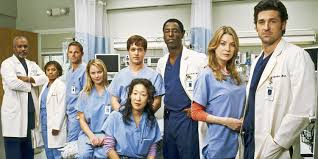
One of my favourite shows of all times to kick us off. Having run for 16 seasons, Grey’s has to be forgiven for growing strange and deviating from its original premise, especially given that, of its huge ensemble cast, only 3 original cast members remain (Ellen Pompeo, Chandra Wilson and James Pickens Jr). Without many of the beloved original characters, many fans have gone off the show. Having only got to season 8 myself (I could only afford Prime once I became a student so not much time to watch all 16 seasons!) I am uncertain about watching it after the departure of (SPOILERS) Sandra Oh.
the original cast
However, I absolutely love the first 8-11 seasons (depending on what you think about a certain someone’s leaving). The drama is always fresh and, despite this meaning some terrible happens to at least one character every five minutes, makes for fantastic viewing. Meredith Grey, a surgical intern with family issues and a rocky childhood, begins her internship at Seattle Grace Hospital and there meets her fellow interns, attendings and residents. The quintessential medical drama, Grey’s is something that any fan of the House or Scrubs has to watch.
c.w. differs from episode to episode, some early ones include death, suicide, gun violence, alcoholism, cancer, miscarriage and divorce.
2.The Simpsons, Disney+
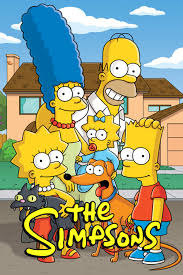
Absolutely. When I first heard that The Simpsons was on Disney+, I binged a good chunk of the later seasons in a few days. It might not have retained the quality of the first 10 seasons, but, Like Grey’s finds ways to make a long run fresh and relatable to today’s audience. To put it into perspective, I am twenty years old and season 11 was airing when I was born, it’s been on that long.
Most people know the concept by now, but essentially, it is a middle-class American family comprised of Homer, the father, Marge, the mother and housewife, Lisa, a precocious 8-year-old and Bart, an under-achieving ten-year-old. It is often compared to Family Guy for obvious reasons, but is, in my opinion, funnier, more family-oriented and easier to watch. Up to season 30 is on Disney+, with episodes also being showed regularly on Channel 4 and Sky One (if you are UK based).
There isn’t much to cw. here, as it’s a family comedy cartoon, but things like death and drinking still feature sometimes.
3. Little Fires Everywhere, Amazon Prime
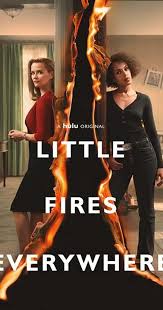
Based on a book I have previously talked about, this mini-series lives up to the hype. Staring Reece Witherspoon and Kerry Washington as Elena Richardson and Mia Warren respectively, it tells the story of an ultra-planned suburb of Cleveland, Shaker Heights, whose quiet life is disrupted when the Richardsons take on a new tenant in their duplex, the Warrens. Mia and her daughter Pearl bring a much-needed sense of adventure to the neighbourhood, but Mia’s past catches up with them, as do the antics of the Richardsons’ youngest child, Izzy.
Witherspoon and Washington are stunning in this series. It is fairly slow, as stretching a 400 page book to 6 1-hour episodes can be, but worth the patience to get to the end. One for bingeing if you have a day free.
c.w. abortion, racism, child custody disputes.
4.Game of Thrones, SkyGo
Now, I know loads of people had already seen this. It was the biggest thing on TV for a number of years, culminating in the (some would say) disappointing final season last year. Every season is now available on SkyGo and if, like me, you haven’t seen any of them, now might be the perfect time to give it a go. Having now seen 3 seasons (and, because of my friends, the second half of season 7), I’m not as into it as I know some people are, but it is an exciting watch for any fans of fantasy, particularly medieval-esque fantasy like Lord of the Rings or The Witcher.
Essentially, it is an epic tale of the nobility of the kingdom of Westeros. As a side note, I really admire George RR Martin for attempting something to convoluted and with some many characters. The Iron Throne is the most coveted spot in the kingdom and, when it opens, the Baratheons are on it. However, the Lannisters have plans to control it behind the scenes, the Starks get drawn in when Ned is named Hand of the King, and the Targaryens are trying to repair their family name and honour. That is a far into it as I can go because it is so complicated, but it is definitely worth a watch. However, I don’t find it something you can binge in one go, I had to concentrate to figure out what was happening.
c.w. pretty much everything. Physical and sexual violence, beheadings, death, incest, violence towards children, murder. The violence is graphic and pretty much a constant in each episode, although the later seasons are better for this.
5. Good Omens, Amazon Prime (or Netflix, depending on who you ask!)
This is probably my absolute favourite book-to-screen adaptation ever. Written by Neil Gaiman and Terry Pratchett in the 1990s, the book was adapted into a 2019 Amazon Prime mini-series starring David Tennant and Michael Sheen as Crowley, a demon of hell, and Aziraphale (took me three attempts at spelling), an angel of Heaven, living among the humans and trying to prevent the apocalypse. Badly. When they lose the anti-Christ (Sam Taylor Buck), they head to the sleepy Oxfordshire village of Tadfield, where they meet Anathema Device, a witch destined to ‘be there also’ at the time of the apocalypse, and the four Horsemen of the Apocalypse.
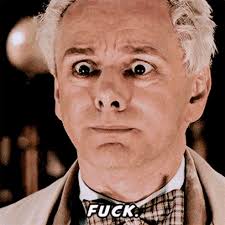
It is hilariously funny and the casting is just brilliant. It is diverse and uplifting, a real demonstration of the power of friendship and loving wine too much to let the world end. If that doesn’t convince you to try it, maybe hearing Michael Sheen say ‘fuck’ in the poshest voice imaginable.
c.w. death (temporary), witch burning (non-graphic), impending apocalypse
6. After Life, Netflix
This is a difficult one to watch, although it is fantastic. Ricky Gervais stars as recently-widowed Tony, dealing with depression and searching for a new purpose in life. Resolved to die soon, he goes around doing and saying whatever he wants to whoever he wants with some truly shocking and occasionally heart-warming results. Joining him is Joanna Page as the no-nonsense nurse caring for Tony’s dad and Tom Basden and Matt, Tony’s work friend. I have a bit of a thing about illness so I haven’t watched the second season yet, I’m gearing up for when I’m feeling right to do so, but if that sort of thing doesn’t bother you, I highly recommend this.
It’s beautiful but also hilarious, some of Gervais’ comedic timing is pure gold and works only for him. The language is incredibly strong but used for brilliant comedy and not for the sake of it. Definitely one for fans of dark comedy and of Gervais’ other work. Only 6 episodes long, I watched it in one afternoon and it is perfect for a rainy afternoon in.
7. Avengers: Endgame (or any of the MCU movies), Disney+
Since the release of Disney+ in the UK, I’ve been on a bit of a Marvel marathon. Now that you can pause Endgame, a brilliant but very long film, it might be time for a rewatch. All of the Marvel Studios films are on there, except for the two Spider-Man films. I’ve got up to Iron Man 3 so far and, although there is a bit of struggle in this film and the next few, in general the MCU has produced some excellent films that are great for either a one-off or an ultra-marathon.
Over 22 films, the MCU chronicles the efforts of the Avengers to protect the Earth and ultimately take on Thanos, a Titan with plans to wipe out half of all life on Earth, based on the Marvel Comic series.
c.w. not complete because I haven’t seen all of the films, but death, mild violence, alcholism, anxiety, PTSD and family separation.
8. Black Books, Netflix/SkyGo
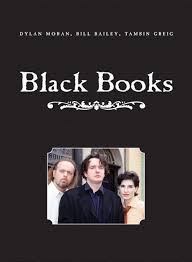
An old favourite, this was recommend both to watch and to include on the list by my parents. Starring Dylan Moran and Bill Bailey, as Bernard Black, a misanthropic bookshop owner and his assistant, Manny Bianco. Black’s best friend and ‘only’ friend, Fran Katzenjammer. The series follows their exploits and Black’s difficulty in balancing his need to sell books and his hatred of others and his profession, except for the reading aspect, but this he prefers to do alone.
Available on Netflix and SkyGo, this is a must-watch for fans of Friday Night Dinner (not just for the excellent acting of Tamsin Greig) and Green Wing. The humour is dry and classically British in the early 2000s.
c.w. drinking, off-screen suicide of a minor character.
9. Euphoria, SkyGo
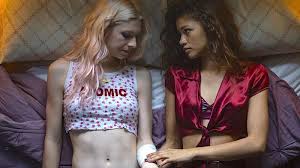
An American remake of an Israeli miniseries, Euphoria tells the story of Rue, a recovering drug addict and ably played by Zendaya, who struggles leaving rehab and rejoining the surreal life of a teenager in her town. Her friend Kat (Barbie Ferriera) explores her sexuality while Jules, new to town, gets used to the school and attempts to make friends, starting with Rue. The series is dark and heady and reminds me somewhat of Juno Dawson’s Clean.
What I love most about it is the focus on life outside of school and usual problems faced by on-screen teens. There is frank representation and I am so happy to see a trans woman actually played by a trans woman. Hunter Schafer is brilliant in the series and I found it hard to believe that this is her acting debut.
c.w. drugs, drug addition, body insecurity, sex, drinking, depression, mental illness, physical and sexual violence.
10. Lucifer, Netflix (s4)/Amazon Prime (s1-3)
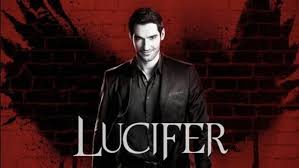
If you’ve seen Tom Ellis as Gary Preston in Miranda (BBC), then this one might be a bit difficult for you to watch. Gone is the adorkable man in jumpers and courting Miranda Hart’s hilarious character, replaced with a dashing suit and a love of partying. Oh, and the crown of Hell on his head. Having taken a break from being King of Hell, he takes a vacation in Los Angeles, where he meets Detective Chloe Decker (Lauren German) and becomes civilian consultant to the LAPD. Alongside his career, he works through his issues with his therapist, Linda (Rachel Harris) and rebuffs the attempts of his brother, Amenadiel (D.B Woodside) to get him to return to hell. Also starring are Lesley-Ann Brandt as Mazikeen (Maze), a demon and Lucifer’s familiar, Kevin Alejandro as Decker’s ex-husband, Espinoza, and Scarlett Estevez as their daughter, Trixie.
It is everything you expect it not to be. Described by Wikipedia as an ‘urban fantasy police procedural detective television series’, it promises a lot and delivers on almost everything. Its move to Netflix doesn’t affect it much, but, Like Brooklyn 99, its move has brought some slightly cheekier moments and reinvigorated the characters.
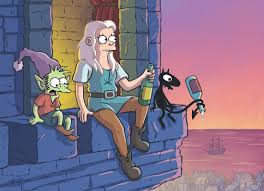
Matt Groening does it again. Produced by the creator of The Simpsons, this animated show tells the story of Princess Tiabeanie of Dreamland, a hard-drinking princess whose wedding day is fast approaching and still mourning the loss of her mother, Dagmar. When she bails on her wedding and meets Luci, her personal demon cum cat and Elfo, an abberant elf who, after leaving Elfwood, goes looking for the pain he has never felt before.
As all Simpsons episodes do, this series starts in one place and seamlessly swerves into another one entirely. The first part (it was released in two parts, and a second two-parted series in starting next year) was by far the strongest but the second was more exciting and, in the end, the weirdness paid off.
c.w. (like The Simpsons, not much because it is all played for humour but..) witch-burning, death, almost forced marriage, slapstick violence, war.
12. The Umbrella Academy, Netflix
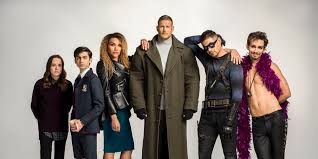
Adapted from a comic book by Gerard Way, The Umbrella Academy tells of seven adoptive siblings, adopted for their intrguiging powers by strange aristocrat, Reginald Hargreaves. Back for their father’s funeral, they reconnect after years apart, remembering the elite superhero unit that their father trained them to be as a child. He never game them names, only called them a number (Number 1, Number 4) according to their usefulness. Notably absent is Ben (Number 6) and Number 5, but his sudden return causes problems for them all.
This is one of the most talked-about shows for a while and the hype will soon return with the premiere of the next season later this year. It is possible to binge it all but its complexity and the long episodes might make it more of a week-er. Definitely one for fans of Marvel.
c.w death, parental neglect, abuse, drug use, grief.
13. She-Ra and the Princess of Power, Netflix
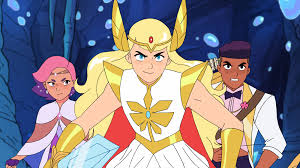
Okay, I’ve only just started watching this one, so I have no content warningsas of yet, so proceed with caution. However, I love it so far. From what I have seen and read, the plot is realistic (within the universe) and well-paced and the diversity is there from the beginning. Sexual and romantic minorities are not often represented in animation, if ever, and so this really is a great addition to Netflix’s library and definitely one to check out.
Set on the fictional planet of Etheria, a young girl called Adora escapes an attack by a despotic villain named Hordak and finds a sword in the forest that transforms her into The Princess of Power, She-ra. She joins an alliance that fights for freedom against the Horde who raised her and finds herself pitted against her old friend, Catra.
14. Disney Classics, Disney+
Of course. The first thing that I watched on Disney+ (after attempting and failing to watch every Simpsons episode) was the collection of classic films, beginning with Snow White (1937) and, currently, ending with Frozen 2 which I don’t think is up yet, but I saw it in the cinema! There is nothing quite like a Disney classic film, there is something from childhood in there that is worth revisiting.
My Favourites include Moana, Pocahontus, Mulan, The Emperor’s New Groove and Frozen. Definitely check them out, even the older ones have some brilliant stories and might well transport you right back to childhood.
c.w. although there isn’t much because they are directed to children, many of the princesses have dead parents, and some of the films have out-dated and offensive attitudes to race (see Dumbo and Peter Pan particularly)
15. American Horror Story, Netflix
When I think about first watching this, I am horrified to think that I was 15 when I first watched AHS. As good as it is (or certainly the first 6 seasons), it is one of the most violent, creepy, disturbing show I have ever watched. Made the writers of Glee no less.
Each season is a story of its own, using the same actors but taking them to different characters and settings each time. The first season, Murder House, is set in, well, as murder house, a large colonial style house in California. The second, an asylum in the 1950s, the third, Coven, a school for modern witches in New Orleans. You get the picture. Starring are Jessica Lang, Taissa Farmiga, Lady Gaga, Evan Peters, Kathy Bates and Angela Basset and many others in a huge ensemble cast.
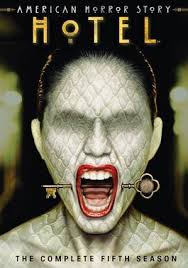
season 5 DVD cover
This series thrives on the weird and the thoughts and feelings that often go unexplored. There is very little that is off-limits so watch at your own peril, but it is a fantastic show that explores emotions and actions that have rarely or ever been dealt with in mainstream TV.
c.w. everything. Murder, death, violence, miscarriage, abortion, rape, sexual and physical harassment, racism, ableism, homophobia, religious homophobia, mental illness, clowns (I include this because Twisty was reportedly so scary that cast members had to leave the set when not on scene with him), sexism, abduction, torture. Many of these things come out of nowhere and involve strange or supernatural elements.
I hope you enjoy at least one of the things on this lists, I have tried to tailor them to a wide range of interests although they are all things that I have seen and enjoyed. Happy watching!
Note: these shows are available on the UK version of all of these sites.
I was thinking the other day about how long it’s been since I started writing and, judging by the first draft of the first novel I started working on – on a Third Generation iPod Touch might I add! – it was about eleven years ago at the tender age of ten. I had lists of novel ideas that I wanted to write, even fairly lengthy plots that, whilst I’m not sure make much sense now, I am actually quite impressed that I was able to do that aged ten.
New writers often don’t have the luxury of chalking their early shortcomings – if they have any, some don’t but most do, definitely including me – to being a child. It can be disheartening and difficult to find confidence when your first drafts and ideas might, in time, seem awful to you or stop making sense. However, I encourage every new writer to stick at it, even if you have never written a single thing before and think everything you have written is terrible (which does not necessarily go away as you keep writing, but it was definitely worst for me when I was new to it) as you will improve in skill, self-editing and in judging what actually doesn’t work and what is just you being self-critical, although those things aren’t necessarily mutually exclusive.
One of things that I found among my old notes was a piece of prose – not sure where in the ‘novel’ it would have come now, but I have some vague recollection that it came in the middle of some sort of fantasy plot with a religious element. I thought I would share it here so that any new writers can see – when I can hopefully share a new piece from recently soon – that it is definitely possible to improve your writing through practice and persistence.
Now, I won’t say that this piece is necessarily bad, it’s just over-described and you can definitely tell that I’m ten and lacking in experience when writing this. Enjoy:
‘The sky was darker than it had ever been. Night descended upon St Mary’s Terrace, swift as a lioness making a kill. The scene was idyllic. Stars twinkled in there – oops! – place in the vast expanse of space. The moon burned the night sky no less bright, though perhaps softer, than the sun, her sister. Candles were out all throughout the quiet, suburban street, no carts, no horses, no people. Nothing.
Helen Honner-White pulled shut her blinds and smiled an absent, peaceful grin. Her self-absorbed mother-in-law had been wrong. At last!
It’d been months since they’d heard anything but sigh of relief on the subject of … She was gone. Her world. Which, until mere weeks ago, Hellen had been sure was the only world, was safe again. She could, at last, sleep in peace again at night, without fear of fire, of enslavement, of death.
However, outside her cosy cottage of 73 St Mary’s Terrace, where her husband, Sir Robert Honner-White, slept deeply in their bed just above her head, something far more sinister than night descended upon the neighbourly street and the grand houses that lined it.
Dated 25 July 2010 as the date last edited.
Now, I am not sure what is happening in this piece and I have left in every spelling, grammar and factual mistake that was in the original. There is also clearly something missing in the middle – I have no idea what subject there had been a sigh of relief over – but I think the message is clear. I had a plot in mind and, even now, I think I can say something good about this. Even in what is objectively the worst thing I have written – at least the worst thing I still have a record of, I remember an accidental piece of Fifi and the Flowertots fanfiction I wrote aged six that probably wins that prize – I can see my passion for writing.
So, if you enjoy writing and want to pursue it, say the words Fifi Fanfiction or keep ‘sigh of relief on the subject of … She was gone‘ in your mind whenever you doubt yourself. I’m now pursuing a degree in creative writing and I’m halfway (almost) through my first novel, but I started out writing snippets of what, on a third read, might well be aliens invading 17th century England, on an iPod 3. Keep going and have faith in your ability!
So you want to write book reviews? Nice! Book reviews by independents and, crucially, other writers, are a vital part of a writer’s career and a great way to get involved in the writing community, build bridges and support other writers. Reviewing is a wonderful way to get into blogging if traditional genres and forms of writing is not for you, and it lets you promote and share your favourite books with others.
I love reviewing, it lets me be creative but also has structure and a solid starting point and it gives me a reason to read more. I love reading but I sometimes find it hard to motivate myself but a review schedule forces me into reading more and reading faster
my last review
I’ve been writing reviews on and off since I was a teenager and I’m going to give you some advice on writing reviews, where to share them and ways to be careful!
Finding Books to Review
Off the shelf: the most common way that beginning reviewers (particularly those that are not also fiction writers/not involved with online community) find books to review. Most avid readers will have a wide selection of books on their shelf or e-book and this is a great place to start. Reviewing a back-log of books you have read provides a wealth of material. You might also consider, if you have a lot of genre fiction or books on one topic, starting a themed blog, for example, a fantasy blog.
Online: another way of finding indie books or very recently published books is through Twitter or Instagram. Particularly Twitter has a wealth of indie writers looking to promote their work and one of the ways they do this is by asking bloggers and other writers to review their work on Amazon, Goodreads, etc. (I’ll write another post about being reviewed this way.) If you are part of the online community of writers, either as a blogger or a fiction writer, searching for writers looking to have their work reviewed is a good way of finding a unique piece to put on their blog.
I use a mixture of these two ways.
Platforms
There are a few different platforms to write and post reviews that all have their benefits and drawbacks.
Blog: the majority of people who review either professionally or on the side of their work have an independent blog. It allows you full control over what goes on there and provides room for an expansive and detailed review of each work. It is convenient for showcasing your writing all in one place and lets you write a long piece. I prefer working with a blog because of all of these reasons, I can expand on what I think about a book, be more nuanced about the pros and cons of something and there is a specific site I can direct people to, rather than an Instagram account that needs scrolling through to find the right thing. The only downside that I find with a blog is that there are a lot out there and blogging platforms, unlike other social media, are hard to gain large numbers of followers on the platform itself, although mailing lists can help here.
Instagram: Another great platform if you prefer to write snappier pieces. Find a photo (if you use a book cover then try your best to credit it to the artists, although cover artists, even for popular books can be hard to find) and write a short piece on what you liked, didn’t like and what it’s about. Follow any related hashtags like #writersofinstagram or #review
Goodreads/Amazon: This is highly beneficial for writers to have their work reviewed on these websites, because they are specifically where prospective readers go to find their next book. I use Goodreads to find out whether I want to read a book, what others think of it and roughly what it’s about and Amazon reviews have a similar use. These should be roughly halfway in length between Instagram and blog reviews. People need to know the rough plot (warn spoilers, obviously!) and what you liked about it – try and include content/trigger warnings if you can here – but not a detailed analysis of the book.
Websites: some websites put out calls for reviews ranging from products, films, TV shows and, of course, books. If you decide to freelance, then try searching Twitter or Google (‘blank’ blog + write for us’) and see what you can find. See specific site requirements for length and level of detail.
Content
What you actually write is largely up to you, but here are a few tips on what can make a good and thorough book review.
Plot: always include a short plot description, try to avoid spoilers unless you tag them first and go above and beyond what is listed in the blurb. Put emphasis on what you enjoyed about the story. Don’t worry if it isn’t a plot heavy book or the plot is non-linear (out of order), make sure your readers know this when you talk about plot.
Pros and cons: Make a short list of pros and cons and, depending on the platform, either just post like this or expand on them a little. Why didn’t you like this bit? What is wrong/problematic about this character? Is it just your taste or something you think might be universal? Try and be objective and come up with at least one of each, even if you loved or hated the book.
Characters: What characters did you like? Why? Did they remind you of someone?
Genre: Comment on the genre – does it blend genres? Does it do something new with the genre conventions?
Comparisons: Be careful here. Genre fiction and contemporary novels can really benefit from being compared to an older or contemporary novel that is popular and that lots of people have read, for example drawing comparison between a fantasy novel and Harry Potter or Lord of the Rings. However, some comparisons can feel forced and be totally different from what the author was going for. You should also be careful to avoid using buzzwords like ‘Orwellian’ or ‘Lovecraftian’ without knowing what they mean or being sure that they are appropriate to the text. You should also be aware that some comparisons may draw offence. For example, Lovecraft was a brilliant horror fantasy writer but also deeply racist, so a comparison to him on a book that tackles racism may be highly inappropriate.
Pitfalls
Being rude: Reviewing is all about speaking your mind, but stay respectful when you talk about someone’s work. Even if it is not to your taste, it is clearly to a certain standard to have been published and the person will have put a lot of effort into it. For example, the average novel is 80,000 words long and that takes a very long time, not to mention weeks to months of editing, proof-reading and second-guessing yourself. I know that not every reviewer will like every novel and it is perfectly within your right as a reviewer to offer your honest opinion. However, there is little need for brutal honesty that insults the writer, especially if it is a personal insult or involves something in the narrative that affects the writer personally. Try and be objective when reviewing – if you don’t like the book, if you think it’s not great, say so, but be tactful and mindful that others may disagree. Above all, be prepared to be challenged and defend your opinion.
Caught in a lie: We’ve all written things and not actually read the thing that we’re writing about. School essays and the like – it is virtually a rite of passage to do one without reading the book. But do not make this mistake with reviewing. It is obvious when you haven’t read it or skim-read it (as skim-reading often bypasses a deeper meaning or an event that might only take a few lines) and it shows a lack of respect for the author and can make your opinion on the text less creditable. Think about it: would you trust an Amazon review from someone who hasn’t bought the product? Make sure you have read the book with some degree of depth and understanding before attempting a review.
Getting things wrong: if you’re going to make factual claims in your reviews, either about the books or the author themselves, then make sure you research it. It can be difficult to distinguish fact from fiction 100% of the time when writing about fiction, as we often claim our interpretation of the text as fact. There is nothing necessarily wrong with that, it is the way in which we explore how we feel about a text and form opinions about it, but be careful when you claim the author has done something they haven’t. Also watch out for using poorly researched facts and inaccurate information.
The book I am currently reviewing – ‘Aliens in my Garden’
Final Thoughts
Reviewing is a great tool for both reviewers and writers that gets work out there, exposes indie writers and bloggers to a wider audience and builds bridges between writers and their reviewers. It brings the community closer and widens your reading list to include more indie writers and things you wouldn’t normally read. I whole-heartedly recommend reviewing other writers’ books/poems/collections if you are wanting to be a writer yourself or are interested in freelancing alongside other employment, as a way of understanding the publishing scene and getting used to writing for public consumption.







 Read With Me