Advice – Twitter

Many aspiring writers are either not aware of the value of the online writing community when it comes to finding moral support and resources, or they don’t know how to go about building a network. Whilst it is not compulsory to have an online presence and it is, by no means, the most important part of being a writer, having a community of like-minded people is invaluable when it comes to building confidence, finding practical advice and resources, finding work, promoting indie authors and even finding reviewers and beta readers for your work.

I am by no means an expert on Twitter, but I have been involved in the #writingcommunity for about two years now (although I now have a new account) so I have experienced a large number of the benefits and potential pitfalls of being active on Twitter. These are some of my tips for getting involved with the Twitter writing community and how it can help budding authors, bloggers and freelancers.

Getting Started

  • Usernames: Choose a username and handle that you are happy to share with others, including in a potentially professional setting, as social media is becoming an increasingly large part of the job market. I considered Tweeting with my blog name, as I do for Instagram, but I used my own name instead. Pen names also work.
  • Profile Pictures: You don’t have to use a profile picture but it helps you to connect with the rest of the community and help you become more identifiable. Understandably, some people are uncomfortable with sharing their face online. I was worried about using a picture of me for my profile image for a long time due to being very self-conscious, but I eventually used one and it was fine. If, however, you wish to keep your face off of the internet for reasons of safety or comfort, then a location shot or the cover of any published work works just as well. The upshot is that your photo should probably be one that you wouldn’t mind someone seeing in a professional setting.
  • Setting up your profile: There are so many things that you can show people on Twitter. Date of Birth. Location. A short bio about yourself. It can seem like a pretty major privacy concern to put so much of your information online. I personally share my location (although ‘Birmingham, UK’ is a pretty wide area so you might only want to do that if you live in a big place) and a bit about what I do in my bio, but not my birthday or my whole life story. It’s really up to you, but this bit is just to put out there what it is possible to show on Twitter.
Editing screen for Twitter profile

Top Tip: Many people use emojis or hashtags in their bios to help other people in their community find their profile more easily. For example, if you are an aspiring writer, the tag #writingcommunity is commonly used.

Links

You are able to link your website or blog on your Twitter profile to expose them to a wider range of people. If you want to link in socials, then you will have to put them in a pinned Tweet or write them in your bio.

  • Blogs/Websites: it is always a good idea to link in your work if you have it in an online platform. For example, I include the link to the homepage of my blog in my bio. Others will link their professional websites, YouTube channels, Wattpad or Fictionpress sites or even Fanfiction accounts. Anything that exposes your writing easily to those who visit your profile should go in this space. When you set up your profile, there is a box for your URL to be pasted into.
  • Pinned Tweets: another great way of quickly exposing your main work to others who visit your profile is to pin a Tweet promoting it to the top of your feed. That way, it will the first Tweet of your that anyone sees upon arriving on your profile, no matter how old the Tweet is.

Keep it relevant

There is a lot of content on Twitter. A lot. To build your following and truly connect with others in the writing community, make sure you keep your posts relevant to some part of your writing career, blog, or your life. Most of the time, anyway.

  • Retweeting: Retweeting the work of others helps get their work out there, particularly if you are a reviewer or book blogger. It helps to circulate the work of indie writers and helps you to build relationships, and demonstrates that you support other writers. But make sure that this isn’t all that you do – just retweeting others’ tweets, especially without any comment or context, becomes repetitive and might get you ignored or unfollowed.
a writers’ lift that I recently started
  • Threads/Chains: These are a fantastic way to find indie work or blogs to read or to get your own work noticed. Usually, a writer with a few thousand+ followers will start a thread where other writers can comment links to their blogs, websites or Amazon pages for writers further along in their career. Adding to these is great, but try to check out some of the other work in the chain so that everyone feels the benefit of this great tool. These make up at least half of my Twitter feed, though, so try not to produce too many. One every week or two is usually plenty.
  • Posts: don’t just retweet the content of others. It’s fairly dull and shows you to be passive. Actively engaging with the community and putting your own content out there (which can include your own threads for others to share) can get you more followers, and therefore a wider audience. It also shows your fellow writers that you are willing to support them and makes people more likely to engage with you and offer support. For example, being involved with community can help you find beta readers and reviewers. It can also expand your horizons and find you new areas of interests. I usually tweet roughly 1-5 times a day, a couple of times a week. This way, I stay active in the community but don’t spam my followers.

Connecting with others

Twitter is not just about that number at the top of your profile, but having more followers can increase the number of people who see your work and how many share it around.

  • Following: Twitter will only let you follow a certain number of people in a certain time period. That number changes depending on your number of followers, the time period and what type of accounts you are following. If you follow too many accounts in one period, you will be stopped from following any more. If this happens, try again in an hour or so, or sometimes the next day, and you should be able to continue following accounts. Try and be open-minded but reasonably selective about which accounts you follow. Follow accounts related to your interests as well as to the writing community, follow different types of writing and blogging accounts, as well as editors, podcasts, publishers and journals to get a wide picture of what is going on in the literary and creative worlds.
  • Rules/etiquette: Like most social media platforms, Twitter has rules against abusive messages, obscene or otherwise graphic images and video regulations. However, there is also etiquette that, whilst not official, it is good form to follow. You don’t have to follow back everyone that follows you – accounts with spam or unrelated content will often follow as many accounts as possible, regardless of what they produce. But, if someone from your field follows you and produces content that interests you, it is polite to follow them back. Similarly, if people mention you in writers’ lifts or retweet your work, it is generally accepted to thank them in some way. Spamming people and messaging them unsolicited things (with the possible exception of sincere collaboration pitches or to welcome them to the community if they have not said no DMs in their bio) is frowned upon.
  • Self-promotion: Having seen a thread about this earlier this month, I have to say this: writers have to promote themselves. Twitter is a great tool for this as you can connect not only to fellow (and perhaps more established) writers, but with reviewers and bloggers who many help you promote your work. Most writers’ lifts and threads encourage writers to share their work. That being said, constant self-promotion, particularly sending promos via DM or commenting on unrelated posts, is annoying and sends the message that you are not prepared to engage actively with the community. Writing is a hard field to get into and everyone needs that extra support.

Resources available via Twitter

Twitter is a great place to look for resources to aid your writing journey.

  • Jobs pages: There are a number of accounts (such as @write_jobs) that advertise paid roles for freelance writers. Often, they will ask that subscribers contribute a little a month towards their Patreon (a site that allows members to pay content creators directly, it is very popular with YouTubers) and thus access job listings and pitch opportunities. This is a great resource that can help budding writers gain a foothold in the field. Whilst they are not exhaustive, they are a good place to start when looking for freelance positions.
  • Magazines/journals: Connecting with magazines and journals that are apart from the mainstream and that might cater more to your specific interest or genre. Often they advertise writing competitions or calls for submissions as their pinned tweet so make sure you check out their feed if you have something that you think is ready to submit.
  • blog links: If you are looking for more blogs to follow, information about industry developments or just new books to read, threads and bio containing links to magazines, websites and journals are super helpful.

Potential Pitfalls

Every mode of social media comes with potential pitfalls, but Twitter comes with its own, because it is so quick and has so many users. It is also famous for the number of bots and spam on the site.

  • DMs: Checking my DMs (Direct Messages) fills me with a little kernel of dread every time. A lot of people send DMs, proposing collaborating, reviewing their work or just to say hi and it is a really great way to connect with others in the community. However, many spammers use it to send self-promoting stuff that has nothing to do with your field (I get a lot of detox teas and, very weirdly, a pair of trainers, advertised through DMs). You do also get the odd inappropriate DM that might contain graphic or sexual imagery (got one the other day, it is not a pleasant experience). If you get this, report the message and, if it doesn’t bother me, I usually delete them and block the person. However, if it bother you or it is constant, keep them in case you need evidence of harassment or illegal activity. You can also request no unapproved DMs in your bio.
  • Getting Lost: If you are new to the community without many followers then it can be easy to get lost in the quagmire. Don’t let it get to you, just focus on getting involved with the community, build more relationships and get involved with some of the fun chain Tweets that commonly go around. If you have a genuine question that only Twitter can answer, comment it on a relevant post that has many retweets or comments or ask a single user directly that you think might be able to help you. Try to ask them first if it is okay to ask the question or get their opinion on a topic.
  • Arguments: Before I joined the writing community, Twitter fights were my favourite past-time. Sometimes I still can’t help myself and it is for this reason that Twitter is famous for being the cradle of so many bitter arguments. There are people on there who just seek to ruffle feathers and provoke debate, often over topics that should not need debating. Because of the anonymity that Twitter provides over other social media platforms, trolls are more common here than anywhere else. And lots of other people tend to pile on because, once you’re in a thread, it’s hard to get away from the constant notifications. It is my opinion that, sometimes, a Twitter fight is worth it if it fights against bigotry or hatred, but it can get very nasty and heated. Try to avoid them if you can, particularly if you engage with potential employers over the platform, as they will probably look through your socials to see what kind of person they will be working with. However, if you do receive harassment or bullying of any kind, do speak up so that it can be dealt with.
  • Freezing: Twitter might freeze your account, seemingly for no reason. They have so many bots and spammers on there that their algorithms freeze pretty much any account that they perceive as potentially not a real person. If you go too long without using the account, post something that is too much like spam or think you have broken site rules, then your account may also be frozen. Site rules are often unclear and posts that are not logically in violation of them might be said to have broken them anyway. If your account is locked for security reasons, you may need to change your password or ask for a verification code to be sent to your phone or email. If it has been suspended by Twitter, then you will need to contact them to see if they will review the suspension and unlock your account. Or else, you may have to make a new one.

These are just some of the potential traps and pitfalls of using Twitter in a professional or semi-professional setting.

Final thoughts

Twitter is a highly valuable tool to connect with other writers and readers and the writing community is strong and full of supportive people. Despite this, there are some people, as with all social media, who take advantage of the relative anonymity to spread hate or negativity. Don’t let this put you off using Twitter, but do bear this in mind when setting up your profile.
Post-Lockdown Planning

Like many people, I returned to my parents’ house for the duration of lockdown. Speaking from the UK (I know, we’re aware of how badly this is being done) we are now in week 9 of social distancing and some form of lockdown and I know I am pretty much over it. Also like many people, particularly university students who have found themselves at a massive loose end, I am frantically making post-lockdown plans. And adjusting existing ones.

Originally, I was going to finish my degree in June of 2021, work for six months or so and then go travelling before I did my master’s in 2022-23. Whilst that may still be a possibility, it is looking less and less likely that the service industry will have recovered enough that I can find a full-time job in order to save for travelling. Compounding that, we have no idea what the travelling landscape will look like in 18 months from now. Either way, my plans may have to go on hold. And that, I suppose, is the point of this post. A reassurance to myself and others that plans changing is okay and to be expected at this uncertain time.

But it isn’t just that. Being at home constantly and spending much of the time reading or writing has made me think a lot more and a lot more deeply about what I really want from life and what I want to be doing after university. I have let myself deviate from my original plan and consider whether the career path I had originally chosen – complete with a very expensive master’s degree – and decide what it is that I actually want.

All of this left me in a bit of a blur. I suddenly have so many decisions to make that I didn’t have before – I am aware that marketing assistant/writer/human rights lawyer is a bit of a mouthful for LinkedIn so a bit of narrowing down might be necessary – and I feel a real sense of liberation. But I am also scared. I now have a reason not to step out into the adult world for another year – panic master’s are definitely a thing now if they weren’t before – and the prospect of changing universities or even cities for further study if I decide to pursue an interest in law. I risk – and this is another story soon to be covered – upending my parents’ plans for me and upsetting their ordered, planned sense of the world. I risk making many mistakes.

It is not an exaggeration to say that my post-lockdown plans change weekly. Not drastically, but I tweak my plans ever so slightly all too often. It feels like I am a child again, wanting to be a doctor or shopkeeper or astronaut depending on the day of the week. But why not? Why not use this time to consider every career option open to me, every travel plan or route through Europe I could take when allowed?

I have thoroughly researched alternative master’s degrees and non-study routes into different career paths and I can now honestly say that I have a better understanding of myself and what I want from life. But there comes a time when you have to live in the moment – hard as it is at the minute with many a cancelled plan passing us by – and stop focusing on life after lockdown. This time is not easy on anyone’s mental health and obsessive planning for life after lockdown (if you are anything like me) might be a sign that you are struggling.

So, my advice to any student – or anyone, really – who is making plans for after lockdown, is this:

  • Consider all your options, not just the ‘safe’ ones or the ones that you know most about – you can always research and, if the current climate has proven anything, nothing is truly ‘safe’
  • Consider what you want – the opinion of others is important in major life decisions, but if you know that you want something, the disapproval of others shouldn’t necessarily stop you from achieving that.
  • Try not to be afraid to change plans – plans that have been in place perhaps since the start of uni now seem like a distant dream. However, you will be able to do them at some point, the world has not ended and it will recover in time.
  • Be patient – I know that is both hard and compulsory at the moment, particularly in your country is doing a better job of lockdown than mine, but eventually this will end and you will be able to implement those plans
  • Gain new skills – use this time to gain new skills through online courses (LinkedIn had some great ones or Open University OpenLearn offers short free modules). As an anxiety sufferer, I live for planning and making lists, but it becomes unhealthy and unhelpful at the moment when nothing can be acted upon.
  • Relax – find a hobby, a new TV show or connect with friend and family. Try to distract yourself from constant planning and redrafting if this is a problem for you.

Lockdown isn’t easy on anyone. Nobody could have seen the world looking like this six month ago. Planning for afterwards might seem like a lifeline in these troubled times but it can soon turn toxic in its own right if it becomes all consuming. If you have any plans that you would like to share, feel free to tweet me (@CharlotteGoodg2) or comment below!

Foray into Religion

I wasn’t sure whether to write about this or not. Religion is extremely personal and has been the centre of a number of heated and unpleasant debate over the last decade in particular. With that in mind, I would first of all like to say that this is my own personal experience and so I do not claim to speak for anyone, nor do I invalidate the beliefs of others. I say that not out of fear of criticism but because so many people who do not have faith belittle those with it. Not everyone, not even most, but too many, even out of the people that I know.

I think I am an atheist. I say that because, despite having no concrete belief in a deity, I enjoy and respect religion. But sometimes, I feel very vehemently against organised religion, its doctrines and how it has shaped the world as we see it today. Sometimes I want to believe in God. Sometimes I even pray and feel as though I am not alone. I feel that prickly feeling of euphoria in a church that a lot of people report as the presence of God. I have a fairly complicated relationship with faith that has spanned most of my life, although I only realise that now, in retrospect.

As a lot of people in country communities do, I went to a church school from nursery through to sixth form. This is what started off my experience with religion, but purely from a Christianity standpoint. Although we learnt – briefly and in unflattering terms of foreignness and ‘difference from us’ – about other religions, namely Islam and Buddhism (don’t ask me why only those two, I have no idea!) we learnt very little about what they are about, practically. Instead, we learnt an all-encompassing ‘Muslims believe this’ or ‘Buddhists do this’. I did not even know about there being two major schools of Islam until the age of 13.

We went to church every term to celebrate Harvest (rinsed of its Pagan origins, of course), Christmas, Easter, Ascension and Year 6 Leavers Day. A strange mix, then. Three days a week, we sat in our largest classroom (for this was a school without a hall or dining room for pupils to gather) and sang from the Come and Praise volume 1 hymn book. We lit the candles and did the nativity and prayed before lunch. At the tender age of eleven, I didn’t really consider whether I actually believed what I was saying and doing every day, but I was about to start.

This image has an empty alt attribute; its file name is cathedral.jpg
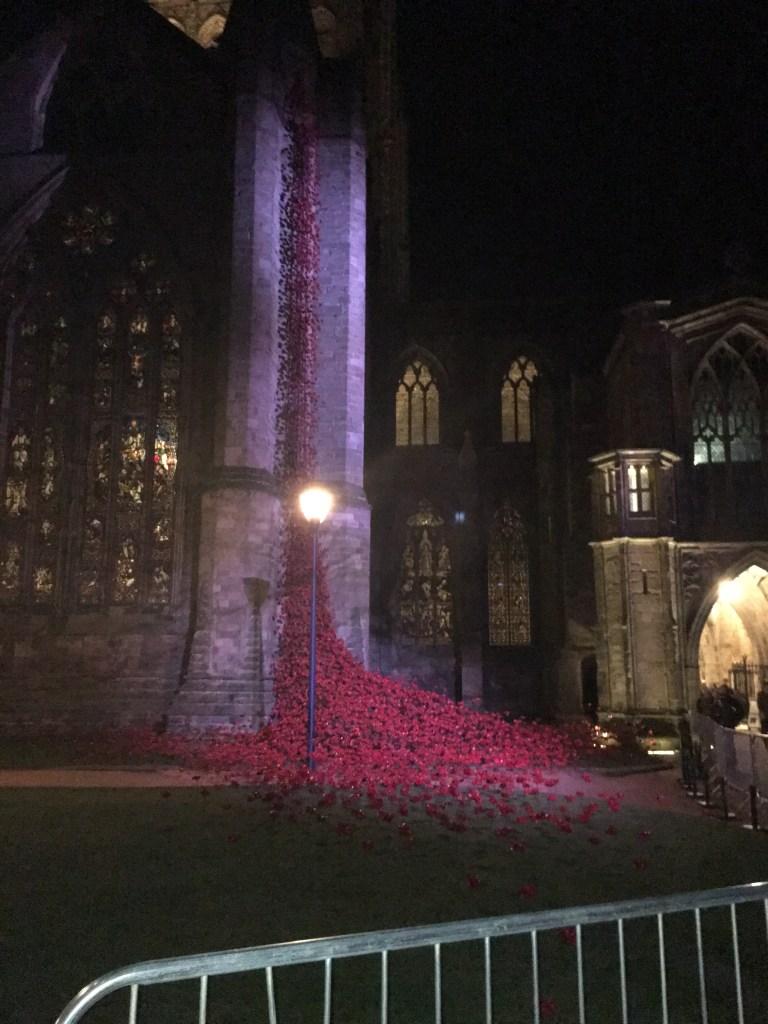
Armistice poppy display at Hereford Cathedral, 2018

If I had thought that a church primary school was a solid grounding in religious education, I was wrong. I started at our local cathedral school in 2011 and began attending church – granted, it was compulsory – three to four times a week, along with Christmas. Easter, Remembrance, termly Eucharist and services to welcome new pupils, say goodbye to old ones and to celebrate the end of term. And I loved it. In 2014, I joined the choir and began to sing – in Latin, of all things – twice a week about loving and praising a God that I still wasn’t sure I believed in. I slowly stopped going up to receive a blessing at Eucharist and joined the school’s vehemently secular LGBTQ society (which I would like to return to later on), I denounced blind faith. But at the same time, I explored my own faith, felt joy and peace in church and in hymns, and sang at St Paul’s cathedral four times as part of a guest Eucharist choir. I was a girl divided.

It is at this point that I should mention that I had been praying every night since the age of eight. When my grandfather died, I tried to pray to connect with him at first, but his death triggered something in me that I now know is a symptom of Obsessive-Compulsive Disorder, but at that point, was just repetitive prayer. I said the same words every night and it didn’t occur to me until years later that I was saying them, not to commune with God, but to stave off faceless disaster for another day. This is where my relationship with faith become more complicated. I had realised that there was a very human reason for my prayer and that I did not believe I was communicating with the divine at all.

For a while after that, I researched many different religions. I suppose I was the classic ‘searching for meaning’ case. It didn’t feel that way, though, because I think I knew that I wasn’t going to find belief anywhere that was the work of Darwin and Hawking. But I have read the Bible, the Qu’ran, the Talmud, the Vedas, to see what speak to me. I found great solidarity in reading Life of Pi.

But the one that stands out for me is wicca. Now, many people are alarmed when they hear this word, for they see malicious witchcraft being used for unspeakable evil. They feel ridiculous even entertaining the notion. But I asked myself why this, among all relgions and beliefs, should be seen as so far-fetched. Is it because it professes that the power lies with the individual rather than the deity – or rather, that it can lie with both (witchcraft, which I know less about, is not necessarily a religion as wicca is, with a deity)? That is incorporates feminine power? That they imagine people running around shouting Harry Potter spells in the woods?

I don’t know. And the more I researched, the more I felt a connection with it. Now, you cannot make yourself believe anything, and I could not make myself believe in a Triple Goddess any more than I could believe in God. But where I see comfort in Pagan religions is that they find power – not necessarily magical or divine power – in nature, in the self and in caring for yourself and your surroundings. There is an element of self-care and self-belief that is missing from my experience of other religions, whilst maintaining the respect for others and the Earth. I think that is what I took away the most from my foray into religion.

There are times when I want to believe in God. And at those times, I still pray, I still try to feel the presence of something else because it is comforting. There are times when I think, to my eternal surprise, that I might be a Christian. And others when I feel the teachings of the Christian church – the Church of England, Anglican, I mean, to narrow it down – cannot possibly fit into what I believe and who I am.

On that last note, I would now like to return to the LGBTQ society that I joined at school that rejected the school’s conservative and Christian message. Obviously, as a school and therefore a safe place for all students, it wasn’t allowed to not let us set up the society, nor were its teachers allowed to profess an anti-gay stance. However, many of us got the sense that this stance was held by a number of staff and some pupils – more so for fear of upsetting the conservative parents than for any actual anti-gay sentiments. I have always been told that religion and being a lesbian are at odds with each other and you cannot have them both. But I fail to see why this has to be the case. I fail to see why sweeping statements have to be made that a certain religion is against women, or vaccines, or immigration. There is nuance to religion and, even on a personal level, that belief does not stop people from making their own decisions.  

So, I would like to end on that thought. I have experienced religion for most of my life and found it a comforting constant that I just cannot be a consistent part of. Doubt and exploration is such a valuable tool in strengthening faith and finding out where you stand. It does not have to be one thing or the other, there are so many religions and sects or denominations of the same religion. I find that faith or an interest in faith can exist on their own, without an organised religion attached to it.

Don’t be afraid to explore what you believe. It may take some time but it is an interesting journey and, at the least, you will understand the world and others better.

’10 types of books you will read during Lockdown’

Unfortunately most of us are in lockdown right now. It’s a daunting situation for the whole world and my thoughts go out to everyone who is currently anxious about themselves or a loved one, and give thanks to essential workers.

Fortunately, a lot of us are using this time to do things that we have never had time for before. So far, I’ve started learning Italian, restarted the clarinet, picked up my blog and instagram (@readwithmeblog) and made it to 12000 words on my WIP – all to avoid uni work! If you’d like to share what you’ve been up to – possibly also to avoid work – tweet me at @CharlotteGoodg2.

What a lot of people have been up to is catching up with reading, so here are the ten types of books you’ve definitely committed yourself to over this lockdown period, along with the books I’ve committed to reading!

N.B I include content warnings for all of my picks on this list, some will naturally contain vague spoilers. I absolutely believe in content warnings and I think more books should have them! However, I haven’t read all of the books listed here (as they are my chosen representative of a category of books) so I will have to rely on the internet for these ones.

P.S – I don’t own any of these cover arts – I have had no luck finding any information on cover artists for all but two, please let me know if you know (at @CharlotteGoodg2) so that I can give credit.

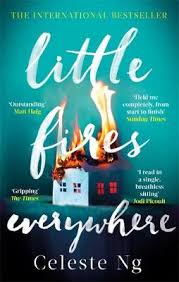
1 – The latest thing in popular fiction – Little Fires Everywhere, Celeste Ng

Now, I know that my choice isn’t desperately new, but it is coming up again (and related to #2 and #3) because it is being made into a mini-series. Celeste Ng’s 400-page insight into a deeply ordered American community, uprooted by the arrival of Bohemian Mia Warren and her daughter Pearl, is a must-read, although not great for passing lots of time. It is so gripping that I had finished it the day after I started.

If you’re not reading this, you might find yourself reading Zadie Smith’s Grand Union or There There by Tommy Orange. Either way, you’ve definitely committed to checking out the latest in innovative and sometimes puzzling fiction.

cw: abortion, custody battles.

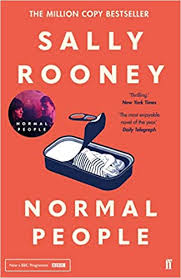
2 – TV’s newest attraction – Normal People, Sally Rooney

I have already read Normal People, but now that it is coming to the small screen, I think I’ll have to read it again. Sally Rooney does a fantastic job at creating these two characters who so deeply understand one another and yet find life very confusing. I find both Connel and Marianne easy to relate to and like, but the whole thing will still leave you feeling frustrated and worn out.

cover art by Henn Kim

So many popular novels have been made into either TV or film that you’ve got the pick of anything, really. I find that TV adaptations – with the exception of The Haunting of Hill House, do not get me started on this – are generally more faithful to the source, so if frustration is not what you want, then start there. Fantasy is also generally a rich vein for screen adaptations, although things tend to be changed around a lot or cut completely.

cw: mental health, depression, bullying, sex and domestic violence.

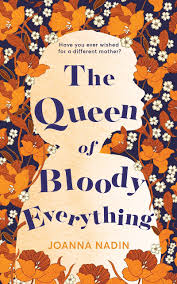
3 – Similarities – The Queen of Bloody Everything, Joanna Nadin

No doubt you’ve reading something that you’ve loved so much that you wanted to read something similar. Or maybe several somethings. I loved Little Fires Everywhere so much that I sought out similar books that might satiate my thirst. I found The Queen of Bloody Everything on the Kindle Store and I loved it.

Joanna Nadin beautifully tells the story of Dido and Edie Jones, an unconventional mother and daughter who move into a neat English neighbourhood and find themselves instantly at odds with their backyard neighbours, the Trevelyans, a picture-perfect, suburban family with secrets and disaster of their own.

I was shocked by the ending, how so few pages could span so many years, and I’m still not entirely sure if I was satisfied by it. Still, this is definitely the kind of book that you’ll be reaching for once summer is properly underway.

c.w. abuse, substance abuse, illness, cancer, death, cheating, broken marriages.

4 – The Prize Winner – Girl, Woman, Other, Bernadine Evaristo

This has been at the top of my list for some time. The joint winner of the Booker Prize 2019, Bernadine Evaristo’s novel presents the richness of diversity and collaboration in a community through a new lens. It was a deserving winner in a year of incredible quality. Seeing these novels read out by their authors at the Cheltenham Literature Festival was a fantastic experience and really showcased the passion that each writer put into their novel.

Prize winners often make it onto peoples’ reading lists because they are cutting edge and often take a fresh perspective on things. Others, like The Testaments are long-awaited and hugely popular. Either way, they make great additions to reading lists, especially for aspiring novelists or freelancers, as well as editors and marketing positions in the publishing industry. A knowledge of the contemporary scene is a must for any aspiring writer/publisher!

c.w. having not read this yet, I cannot find this information online.

Others that I would recommend that have recently won or been nominated for a prize include Milkman, The Mars Room or 10 minutes and 38 Seconds in This Strange World.

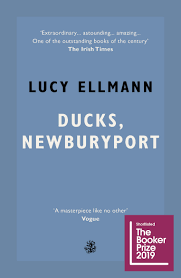
5 – The Long One – Ducks, Newburyport, Lucy Ellman

First of all, let me warn you. This book is a single sentence.

This is another Booker nominee from last year. But this has made it onto my list for another reason entirely – it is really bloody long. Clocking in at 1020 pages, it was by far last year’s longest nomination and is one of the thickest books I have ever bought. It tells the story of a housewife in Ohio, pondering the existential meaninglessness of life in the modern United States whilst latticing cherry pies. It is the premise that a lot of people shy away from, because it is painfully real for so many people and it is a deep-seated fear that so many people can’t admit to having. I definitely have it.

Lockdown is the perfect time to read The Long One. It might take a week, a month, even two or three months, as they are usually complex and contain lots of characters. They are ambitious and fascinating and need plenty of time to digest. They are philosophical and but difficult to maintain – the writer has to be very skilled to keep 1000+ pages of the same story from becoming dull.

And that brings us nicely onto no. 6!

c.w. unfortunately I haven’t read this one either yet and have been unable to find any warnings online.

6 – The Classic Long One – Ulysses, James Joyce.

On my first day at university, when questioned on our encounters with classic literature, one of my classmates said ‘fuck James Joyce’. I am currently 18 pages into Ulysses and I am beginning to understand what he meant. This novel has been on my list for years, since I decided upon a literature degree. It is a classic and a behemoth. The Oxford World Classics edition logs 1056 pages of dense prose and turns of phrase from over a hundred years ago. Over the course of a single day, it chronicles the lives of ordinary Dublin citizens, combining a number of different themes and literary styles that serve to create a surreal text.

Everyone I have ever spoken to about this novel has said ‘I’ve been meaning to read that. It’s the one that every literature student either claims or aims to read and I am no different, but I can’t see myself getting to the end of this, if I’m honest. It is an objectively ‘good’ book, but it is incredibly dense and dull in parts. Already.

c.w. will update as I read.

7 – That novel – The Secret History, Donna Tartt

Everyone has that novel that everyone has recommended to them with glowing reviews better than you ever thought possible. For most writers, it is the answer to the dreaded question ‘what book do you wish you wrote?’ For me, it is The Secret History.

I read this for book club a few months ago and I will reread it in due course. I loved it so much that I decided to write my coursework on it. I have never read anything quite like it and doubt I ever will again.

cover by Chip Kidd & Barbara de Wilde

It tells the story of Richard Papen, Californian student who moves to Vermont to a small liberal arts college where he then falls in with an exclusive group of classics students who study Greek literature and language under the tutelage of Julian Morrow. Inquisitive above all else, when an experiment goes wrong and they end up committing a dreadful crime, Tartt explores how far people will go to hide their wrongdoings when they are entitled and unconcerned with others. She muses on how far ethical academic research can go before it becomes taboo – and why is it taboo in the first place.

I’m not entirely sure why this novel is so fascinating. Perhaps it is the classical education that characters are receiving, or the feint that it will be a murder mystery. Either way, this is such a fantastic and thought-provoking book that, whilst 700-odd pages, is well worth the invested time and effort.

c.w. murder, guilt, near-death, suicide, abuse, alcoholism, incest, drugs.

8 – Non-fiction – A History of God, Karen Armstrong

If you’re anything like me, you have a shelf full of non-fiction books that you have collated over the years that have very little to do with your everyday interests. Among my collection are a number of Alice Roberts’ anthropology books (which I highly recommend), Iran Today (which I am finding very difficult) and this book, detailing the evolution of God from the beginnings of recorded history to today.

Religious history and its attached philosophy is very interesting to me and I can’t wait to read this book, but I have put off reading it for this long, mostly because of the tiny font, dense writing and difficult subject matter. I’m sure we all have this, a book that we bought with the intention of widening our horizons and ended up shelving it for months if not years.

I encourage everyone to focus on this part of their bookshelf – it often gets neglected, but we get such a sense of accomplishment when we have finally finished a book that expands what we know and have been meaning to get to.

c.w. haven’t read it yet.

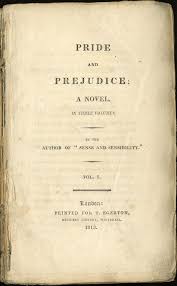
9. Timeless classics – Pride and Prejudice, Jane Austen

I think Pride and Prejudice is the book that everyone reads. As far as classic novels over 200 years old go, it is accessible in language, themes and length. Elizabeth Bennett and Fitzwilliam Darcy are charming and, despite the social graces of the 19th century, the book is perfectly enjoyable for modern readers. It records the confused courtship of the two main characters, the strange society of the English countryside gentry and introduces us to Austen’s most perfect, flawless character – that she appears to have named after herself!

My initial worry with this type of book was that they would all be like Ulysses (see no. 6). Plenty are, if not for their plot then for their turn of phrase. Not only is it archaic, they are English and so they are not universal (however much some of those Victorian authors might have thought their views were universally representative). However, I hold Pride and Prejudice very dear to me, as it provided me with a window into a group of novels that often risk being discriminatory (Robinson Crusoe is a very difficult read).

10. Series Finale – The Queen of Nothing, Holly Black.

To top off my list, I will finish a series that I started a long time ago. Holly Black’s Folk of the Air series tells the story of Jude Duarte, a mortal girl stolen from her world by her mother’s ex-husband, alongside her oldest sister Vivi and twin, Taryn. She grows up in the realm of Faerie and is taught alongside cruel and foppish Prince Cardan. When the question of succession arises between Cardan and his five older siblings, he and Jude find themselves at the centre of a murderous, plotting game of betrayal.

The first two novels are brilliant, if YA fantasy is your thing. Both end on cliffhangers but do not feel random or forced in. I have been waiting for this final installment for ages and I am very excited to be able to finish off the story.

c.w. murder, violence, kidnapping, abuse, death.

Starting a series is always a difficult thing, especially when they are longer than three or four novels. House of Night, for instance, is one of my favourite series from when I was a teenager, but at 12 novels, four novellas and a spin-off novel series, it is a commitment that I wasn’t ultimately able to continue, having started at 12 and now being 20. I would always recommend them, however, because of the connection that it is possible to feel with the characters and location. Fandoms can be a great community, if you know how to be careful in online communities, and they are a source of great enjoyment across all ages.

If you are that bit older than when people usually first start on fantasy series, I recommend The Witcher series, Slated or any of Sarah J. Maas’ series (who, I know, isn’t for everyone, but I love her!)

Finally! Thank you everyone for checking out my list – tweet me if you have anything to add or any recommendations!

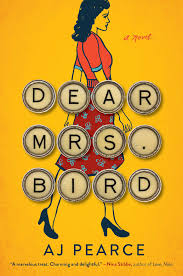
Dear Mrs Bird

Front Cover as designed by Kimberly Glynder

This is one of those books that lots of people have read but not many seem to have heard of – certainly far fewer than have read it, in my experience. That’s understandable – it’s definitely quiet in its quality, it doesn’t brag about being good. It is, however, very good and delightfully uplifting to read about women in a time when few of think of women enjoying many rights.

This book has been on my shelf for ages – as usual, I feel like I say this every time, but I buy them quicker than I can read them! Well, I say my shelf, I stole it off my mum so….

Anyway, I zipped through Dear Mrs Bird and I was charmed by every page. The length is perfect for the story, any longer and it would have dragged but there is enough in there to flesh it out. We follow Emmy – Emmeline, named presumably after the Emmeline Pankhurst as her grandmother was a staunch Suffragette – through her life in WII London. Living with her childhood best friend Bunty, she does her bit for the war effort but longs for a career in war journalism alongside her relationship with Edmund, her school sweetheart. Bunty, similarly enamored, strives to keep her head down and work where Emmy bends the rules.

Upon meeting the formidable Mrs Bird at her new job, Emmy begins to feel frustrated with her lot and Mrs Bird’s rules. People need help, real, useful advice, and no one is willing to give it. But Emmy just might be.

By about fifty pages in, you see where this is going. Except for the second major plot point – which I cannot name for spoiler-y reasons – which will smack you right in the gut. I suppose I should have seen it coming or at least something like it, but A.J. Pierce does such a good job of hiding what will happen. It crossed my mind that the first part of the book might be so obvious so as to obscure the second half.

What I like most about this book, I suppose, is its charm. Emmy and Bunty have a beautiful friendship, complimented by the exhausted Mr Collins and the nervous Kathleen. Much of their lives are magazines, writing, letters, rosy country cottages and a whiskey to calm the nerves. Slotted in among that are bombing raids, raging fires and death. It is eerie as well as charming.

It has occasionally been accused of seeing the war through rose-tinted glasses, but I must defend it here. As the novel is told through Emmy’s eyes, and her ‘just get on with it’ spirit was not uncommon, indeed it was the national policy on the war, domestically. What else could they have done?

Now, there have been criticisms of this book, some of which I see and agree with. Whilst it is very refreshing to see women’s roles in the forties not reduced to housework – they did actually take on a significant amount of war work – and accepting and liberal families like the Lakes did exist, they were likely not the norm and the novel is, in places, highly flippant about the lack of equality that women faced. Or perhaps, I should say, Emmy is flippant. The novel is through her eyes and so perhaps I might be wrong – why should she hold the exact same view as me, eighty years later, when she’s right in the middle of it? Either way, the novel is enjoyable and accurate but does not tell a typical story.

The ending is a definite deus ex machina. I have no real problem with these, it’s a real feel good moment when someone shows up to save the day, but I was left with the feeling of ‘well, this all tied together nicely’ or ‘Rather Nicely’ as Emmy might put it. I did like this book, but it is a quick, refreshing read without huge amounts of other layers.

I’d definitely give it a read, even if you are into longer, more serious fiction or even war non-fiction. It might surprise you!

Language Learning!

Salut! J’apprends le Francais encore parce que beaucoup des pays requerent l’etudiants apprendre une langue. Mon ami francais parles trois langue, qu’il apprendait a l’ecole, et je suis triste que nous n’apprendons pas les langues comme ca en Angleterre.

A l’universite, j’apprends le francais et l’allemande comme une activite paracscolaire – je ne suis pas confiante d’ecrire en Allemande sauf si je dis bounjour ou au revoir! Le problem avec l’espaniol est je peux demander les directions a la gare ou au supermarket, mais je ne comprends pas la reponse encore.

C’est tres difficil de penser dans une autre langue, particulierement un langue dans lequel je ne suis pas courante. Pourtant, j’admire les personnes qui peuvent parler plus qu’une langue.

Je voudrais visiter tous les pays en Europe et je voudrai comprendre les personnes. Mon ex-petit ami habite aux Pays-Bas, donc je voudrais visiter lui. Il me veut d’habiter avec-lui l’annee prochaine tandis qu’il travaile la-bas, mais je ne parle pas la Néerlandaise. Il me dit que la plupart des personnes parlent Anglais, bien que je voudrais parler la langue.

Popular vs Literary Fiction

On Tuesday, I was in a lecture in which we compared the features of popular and literary fiction. To be entirely fair to the speaker, they gave equal time to both and discussed both as having merits and drawbacks. However, underneath this, there was an underlying tone of ‘looking down’ on popular fiction. I know this isn’t uncommon in the community of publishers, writers, editors, reviewers and even readers to take this view, and I am not saying I am surprised, just curious. I am going to try and work out what it is about popular fiction that gets it relegated from ‘literary’ circles and generally viewed as less.

Firstly, I should say, I read both and enjoy both. I also write both, which gets very complicated sometimes, but that’s another post. They do indeed both have merits and faults. Like most people, I started off reading a form of popular fiction: YA fiction. I am still technically a young adult (20 counts, right?) and still enjoy reading and writing this type of fiction, but I see and accept its faults.

YA fiction, whilst entertaining, mostly deals with a lot of the same themes in its books and uses a selection of stock characters and situations to tell its story. The romance side of things is often repetitive and, for LGBTQ+ teens (particularly of my age, beginning in around 2011) largely heteronormative. However, some YA novels deal in heavily emotional and realistic stories. One that sticks in my mind from recent months is The Hundred Lies of Lizzie Lovett (Chelsea Sedoti). Whilst typically far fetched in terms of featuring a young girl getting involved in a missing persons investigation, the crashing realisation that Lizzie has not become a werewolf as the dream-loving Hawthorn first anticipates, rather she has (spoiler/cw:suicide) killed herself is shocking and very emotional.

YA novels, though, in particular YA fantasy, have one undeniable perk. I don’t know anyone that does not know someone who got into reading through Harry Potter or, if you are a bit younger, Twilight or Shadowhunters. Novels like this have innate value even if they are not ‘literary’ because they entice people into reading and appreciating the work of others (because, whatever you think of any long fantasy series, writing 6-8 300+ word novels takes some work). However, this is not all that they are. Popular fiction is not just a gateway to ‘better’ fiction, it is entertaining, insightful and uniting in its own right and, I think, deserves to be seen as such.

Now, adult fiction is a bit different because this is where we see the emergence of real ‘literary fiction’. The expansion of organisations like The Booker Prize (formerly The Man Booker Prize) to include a more diverse and experimental selection of works has led to a resurgence of literary fiction, alongside the success of novels like Normal People, The Girl on the Train and Little Fires Everywhere, which straddle the line between popular and literary fiction.

I think this is the best type of fiction for adults. My reasons for this are a few:

  1. ‘Literary’ fiction in its purest form is time consuming: I am currently reading Zadie Smith’s NW for an assignment and it is not the longest of books. But it is taking me ages. It’s fantastic but as an experimental novel even 50 pages can require two hours or more of rereading, pausing and orientating yourself with the layout on the page. This is time that most people do not have (if I weren’t doing it for my course, I certainly wouldn’t have the time) and makes a wonderful plot inaccessible.
  2. At a certain point, being literary doesn’t add anything to a story: Angela Carter is one of my all-time favourite writers, but not many people can pull off her style of over-description and still have an effective story. Beautiful description has a place and can be very effective, but sometimes the emotion and realism of a story can be lost beneath clever description.

In addition to this, fiction that is both literary and popular is uniting. Book clubs and friends in coffee shops the world over will have discussed Gone Girl or Elizabeth is Missing. The messages are real and deep but are not lost beneath thickly-laid philosophy or wordplay.

I am not saying there is anything wrong with literary fiction. It has its place and is usually very insightful, but the view that one is not ‘a reader’ until they read time-consuming and difficult ‘literary’ texts is an outdated one that does not consider the wealth of excellence that popular fiction contains.

Review – Ghost Stories

‘Theatre can outdo cinema for horror’. This is the assertion of Ghost Stories creator Andy Nyman, following the huge critical success of his collaboration with Jeremy Dyson, both on the stage and, somewhat ironically, on the big screen. Sceptical, I dismissed this article when I first read it as a plain (and, in my opinion, necessary) attempt to inject life into his creative niche. However, having seen Ghost Stories for myself, I am writing to recant.

First produced at the Lyric Hammersmith, Ghost Stories uses a small cast of four (sometimes five) actors to turn a classic play-within-a-play into something delightfully and deliciously scary. Professor Goodman leads the audience by the hand through three segments, delivering the ghostly encounters of a night-watchman, a young (uninsured) driver and an expectant father with an obsession with his phone.

The characters are somewhat a selection of stock figures in stock locations for the horror canon. We learn little about them beyond something obvious in their life or personality that lends itself well to a good, old-fashioned haunting – a pregnant wife, being alone in a forest or a switching yard, an old radio that had long gone out of use by the time this play was set. However, I think this worked in that the purpose of the play is not character driven – or rather, it is examining the collective character of the audience rather than those within the play that is important.

The opening will confuse you, I promise. Beneath a chorus of drums and symbols, a montage of confused pictures and numbers flash across the curtain in the blink of an eye. I assumed, possibly naively given how much I enjoy stage shows, that this was a red herring, another tactic to instil pointless fear into the audience. However, I was not disappointed. Upon closing his final tale, Goodman becomes helplessly into the stories that he has tried his whole life to keep at arm’s length and the slightly bizarre opening suddenly makes horrifying sense.

For fairly traditional theatre – period-appropriate costumes, scripted, brilliant scenery – this show is experimental in its way. I found myself constantly waiting for the next thing, never sure where it would come from even though I knew roughly what it would be. Jump scares though they are, they aren’t cringy or, if they are, you will be too scared to notice.

If there is any overkill in this show, it is the sound effects. Each segment ends with perhaps the loudest scream I have ever heard and it is replayed throughout the play – see the hand-on-the-window scene in The Woman in Black. Whilst scary and effective for its purpose, the less imaginative in the audience will come to expect it by the end.

I thoroughly enjoyed this play but, as a writer, I have the obligatory overactive imagination and I lost about three nights restful sleep to this show. I would, then, recommend it but with a caution for writers and children not to attend.

On a serious note, they warn people with conditions that might be aggravated by sudden shocks not to attend and I would second this advice. Same for young children and photosensitive people!

Three Things

I’ve been working on a short piece of fiction speculating how villainous lackeys might be feeling the day of the deciding battle – think the Malfoys or the orcs!

‘Three Things’

My father always told me, at the end of each day, to write down three things I had learned that day in the diary that I obviously kept. Of course, that was terrible advice and when I killed him, I stood over his corpse and said ‘write that in your fucking notebook’, but today, I think, I might just do it. 

The first thing I learned was that, when you tell humans that your best friend is going to die today, they naturally turn to boundless sympathy as a first response, rather than a cruel, if sadly accurate, character assasination of her. Now, I was doubly pissed off about this lesson because it happened before dawn and I hate learning before I’ve felt the sun on my face. Not that we get much sun down here – why every coven member since Jezebel has chosen a cave system as their hideout I’ll never know – but a girl can dream. 

My hands are aching from the climb up here, but this is strangely cathartic. I think I’ll expand on this list a little, it’ll give me a break from all her morbid talk. Sidekicks, if people in the real world actually have them, get bored too, you know.

Although I try and avoid the humans, for the plain and simple reason that they take one look at me and take a collective jump back to the days of burning women for owning black cats, today, I had to go into town to grab a few things. The next few weeks might get a bit hairy and I can’t be doing without peanut butter in these trying times. So, I zipped down into town. It’s not very big, in fact it’s distinctly average in terms of human settlements – two supermarkets, one poorly serviced train station, three local weirdos and four streets that ostensibly make up ‘the centre of town’ – but it would have to do. 

I have lots of suits of armour. Down the traditional route, I have chainmail and a full suit of steel coverings. Kevlar for the more modern jobs and an extensive collection of shields compose the back wall of my wardrobe. What I never anticipated watching her dismantle Arthur’s court was that a hoodie and baseball cap might one day be the greatest form of camouflage. Somehow, my horns drew no notice as I walked through the town and, if the cashier at the mini-mart noticed the bulge under my hat, he said nothing and handed me my change. 

I don’t know how I came to talk to the woman with pink hair. Peanut butter and other groceries safely purchased, I decided to take a final stroll through the park. I was almost sad to watch the children on the swings, pushed by tired parents and babysitters. Old couples, still hand in hand, teenagers who were actually teenaged unlike yours truly, gorging on ice cream, families soaking up November’s final rays of snow, all brought me to the edge of depression. They leave us with little other option but to involve them in this – it’s unfortunate to lose the only good influence on such a degenerate species, but needs must. I walked on until I came to a bench, empty except for a pink-haired young woman, crying desperately into a tissue.

If it’s possible to roll your eyes at yourself, then that is what I did then. The woman could have been a still life of Greta, four hundred years ago, the hope physically draining out of her. I sat down tentatively beside her and, cringing for my inherently damned soul, laid a hand on her arm. 

She did a sort of sob and laugh together, snot dripping onto her shirt. I barely held back my disgust, but I managed to choke out ‘are you okay?’

People think it isn’t natural for witches to enquire after people. Greta certainly doesn’t, but I’m entirely lost as to where this came from. As if she can sense what I am, she baulks at me before answering. 

“Oh, it’s nothing.”

Curiosity got the better of me, and a small part of me relished human tears – don’t judge me, it’s practically in the job description – so I pressed on. Eventually, she split wide open. 

“It’s just,” she managed to stop crying long enough to tell me the story, “my best friend – he’s called Nick, I knew him from school, just told me he doesn’t have very long to live.” The tears started up again, staining her face splotchy red. Dread lances at my stomach. I might know how she felt. I wasn’t sure then, but I had the growing idea that I might be right. So I ran with it. 

“That’s terrible,” I found myself speaking without awareness, my mouth moving without my brain knowing what would come out. Then “I know how you feel.” Don’t say it. “My best friend.” Don’t. “Greta.” Fuck. “Is probably going to die today.”

“Today?” This was, apparently, the wrong thing to say. She collapsed into my chest, great heaving sobs leaving snot trails on my shirt until she was finally able to prise herself from my arms. With a parting shot of ‘poor thing’, she hurried off, suddenly desperate to get away from me. 

I love Greta, never mistake that. But I know what she has done and I claim no right to defend her for having a faultless character, not today, of all days. When most any human in the know hears she will probably die today, they will cheer and throw a party Jay Gatsby would be impressed by. To hear a human cry for her… I don’t know how to receive it. 

Sorry. 

Now, diary, the second thing I learned today is that it is nearly Christmas. How did I learn that, you ask? It goes hand in hand with thing two point five of my list – humans aren’t afraid of caves like they used to be. No, in fact, they slather them in fake snow and cheap nativity scenes and light them up like, well, like a Christmas tree. Of course, the surface levels of the caves have visitors all year round, but you can usually blend in by throwing on a hideous jumper and hiking boots, but this is something else. Greta’s been driving me hard these last few days and I was barely awake when I came face to face with a sticky little girl with bits of candy cane in her plaits. To her credit, she didn’t even think of cringing away from me, instead choosing to shove the remnants of the candy cane into my hand and run off, calling for her mother. 

Apparently, humans come here every day. They even have a gift shop. 

Yes, it is nearly Christmas. Nine terrible, dreary, work-filled days before billions of adults can finally drown their livers in alcohol for two days before getting back to the drudgery. Probably not my thing. 

Still, in a tacky sort of way, it is a thing of beauty. There might be no conceivable point to a fir tree coated in plastic beyond being tumbled by an escaped child, but I can’t help but wish Greta would lift her stringent ban on decoration. 

I stare down the mountainside, remembering the last time I saw the General here. The hatred in his eyes was a thing of horror of which only humans are capable, his sword desperate to taste witch blood as if he would die without it. Which he might have. 

I sigh. The centuries have been long and I have seen many friends and lovers die of old age before my first wrinkle has even appeared. Whispering a prayer for them, I know I have to go inside. The darkness of night is swiftly closing in and we have things to do – business to attend to. 

I haven’t learnt it yet, but I know what the third lesson of the day will be. This bit won’t be legible after – if there is an ‘after’ – my hands are shaking and I can’t stop my breath from hitching in my throat, but I hope some of us are around to read it. I’m fully aware that these things don’t generally come down on our side. 

If any human finds this, we’ve read all the stories. Well, I have – a lot of her dogsbodies are not linguistically gifted, but I have seen the Wicked Witches of the west and east, watched Gothel melt, felt Maleficent (nice name, by the way, I rather wish my mother had thought of it) burn. I know that, even if we look set to win, Greta will probably die at The General’s hand and her death will be far too violent and bloody to call it justice, but he will call it that anyway. 

The cold is coming. I shiver as the last dregs of the sun vanish from the rocks beneath me and I know my last lesson is about to follow. It is the way it has to be, the world demands that it be this way. But we are right. And I hope the world knows it. 

Tomorrow we fight and tomorrow we die.

My first attempt at a script

Tattoos

  1. INT. TATTOO STUDIO – EARLY AFTERNOON, 2019

A tattoo needle is heard as the title card [‘TATTOOS’] appears. Fade in from black. A tacky, yellow vintage radio is playing tinny orchestral music: ‘Jerusalem’ by Charles Parry, on a cluttered old sideboard. LUCY (24) is sat having a tattoo on the inside of her left forearm, silently wincing. She has short hair dyed a bright colour. Unable to bear watching anymore, she turns her head and watches the radio. The ARTIST (38) wipes some stray ink off LUCY’s arm, nods at her and goes over to the desk. LUCY looks down at her new tattoo – a set of delicate arrows, all in black.

The music fades out…

FADE TO:

     And back in…

  • INT. CATHEDRAL – EARLY EVENING, October 2012

An organ plays the same music as SCENE 2 but the sound is far crisper. FAYE (18) is singing her solo. The church is lit by candles and electric lights in a strange mix of modern and ancient that is not quite comfortable.

In the choir stalls behind FAYE, standing, is a school choir, with LUCY (17) standing in the middle. She has long hair, dirty blonde, a shy girl. She is staring intensely at her sheet music. The choir members are dressed in red blazers and red pinstripe skirts, all ill-fitting. All through the scene the piece, first with lyrics and then without, continues.

Voices are inside LUCY’s head, distorted and echoing, but still intelligible. LUCY’s accent is a non-regional English accent, not impossibly posh but from the Midlands, the Cotswolds or the Wye Valley region.

FAYE

They really don’t hurt that much. I think you’d suit one.

LUCY

Really? Not sure I’m really the type.

FAYE

(mock offended)

What you saying about me?

LUCY

You know what I mean

FAYE

I do.

LUCY

My mum’d kill me.

FAYE

Just don’t tell her.

The sound of a cigarette being lit.

Music fades out.

  • INT. MACMILLAN CENTRE RECEPTION – NOVEMBER 2012

In her school uniform, LUCY waits for her friend in her mother’s workplace. The reception is clinical and the doors are all closed. It is poorly lit but everything is visible.

Two people leave on the rooms and LUCY smiles at them, which they return, and shuffles a little to get out of their way. She bumps into long poster on a stand. On it is examples of tattooing being used to cover or incorporate scars, with the words ‘what can tattoos do? Ask us about complementary tattoo sessions’. LUCY smiles.

After a short wait, her friend GEM (17) comes out of the kitchen and drags her through the front door.

  • INT. TATTOO STUDIO – EARLY AFTERNOON, 2019

Cut back to the tattoo parlour. LUCY examines her new tattoo again. Without much conversation, she pays him and leaves. Outside is grimly dark and grey in a small city, she hurries towards the bus stop. Her smile quickly fades into a sad expression. Fade to black.

  • INT. LUCY’S TEENAGE BEDROOM – LATE EVENING, 2019

Fade in, with shouting heard over the top. Open on a framed, slightly faded photograph of LUCY (6) with her MUM (33). Her mum, NORA (now 51) is banging on the door.

NORA

For God’s sake, Lulu, open the door.

LUCY

I’m twenty-four. It’s a tattoo; get over it.

NORA

(A growl of frustration)

Why did you have to get it there? You’ll never get another job! Your dad and I didn’t work that hard to send you to a good school for you to-

LUCY

For fuck’s sake

(instantly regretting her outburst)

Sorry.

  • INT. LUCY’S TEENAGE BEDROOM – EARLY EVENING, 2019

A single street light outside clicks on. Music plays from her speakers. The room is well-loved, not untidy but not immaculate, 2000s era-appropriate posters and memorabilia are present but not too prominent.

LUCY (24) is naked in front of her mirror, watching her body as if she is expecting it to do something. She runs her hands over the tattoos on her hips and the large ones on each thigh. Snotty crying, happy laughter and screams, sharpening blades and the snapping of rubber gloves overlap as a distorted soundscape as fade to an idyllic Christmas scene.

  • INT. LUCY’S FAMILY LIVING ROOM – MID MORNING, 2014

A softly lit living room, a family are opening presents. Silence except gentle piano music over the scene. The scene moves slowly through a montage of Christmas things – Buck’s fizz, croissants being handed out and eaten messily, wrapping paper littering the living room, nice outfits specially bought for the day, sitting at the dinner table, far too much food for present company, with AUNT HELEN (42), Nora’s sister, and JOAN (68), LUCY’s grandmother. The conversation has moved to tattoos. This is not the first debate they have had that day.

JOAN

Speaking of, have you seen that model recently?

LUCY

Not personally, no.

NORA

Lucy! Sorry mum, what model?

JOAN

Oh, you know the one. She was in that film. With that one from Men in Black. Kayla somebody?

LUCY

Cara Delevingne.

JOAN

That’s it! Oh, she’d have been so beautiful if she hadn’t done that to herself. So many pretty girls, ruining their bodies.

LUCY

Some people like them, Gran. I like them. Not sleeves, just little ones.

NORA gives LUCY a look of warning.

JOAN

(disgusted)

Oh, Lula, no. Don’t get tattoos, will you?

Fade out.

  • INT. NORA AND HARRY’S BEDROOM – NIGHT

The room is dark and the shadows seem to move. Nora sleeps with her face to the door. The room is impossibly neat.

LUCY enters, facing her mother. She grins, flicking the light on. Her face is fully covered with a criss-cross of blue ink, with the words ‘take that, mum’ on her forehead.

Nora’s breathing grows heavier as Lucy moves towards her.

Nora opens her eyes and looks at her daughter silently for a few seconds before she starts to scream.

CUT TO:

Nora is awake in the dark, her husband still asleep. She pants and then shakes her head, laughing at herself and turning over to go back to sleep.

LUCY (VO)

I didn’t believe her when she told me about it in the morning. She had to be making that up.

I guess dreams are just funny like that.

9 EXT. LUCY’S PARENTS’ HOUSE – EARLY MORNING, 2014

Two swallows fly after each other, landing on a telephone wire outside LUCY’s house.

LUCY (VO)

So, it wasn’t quite a full face of blue ink.

She jumps onto her bed and grabs her sketchpad, starting to sketch out the design, two swallows diving towards one another.

I wouldn’t say I got them out of spite. Well, alright, I did, the birds anyway, but spite is such a horrible word. I wanted them.

Maybe I wanted to be them.

10 EXT. EXMOUTH BEACH – MIDDAY, 2018

LUCY (23) sits on the beach in a bikini, running her hands over her thighs. It is windy and cloudy. There are similar sized tattoos on each leg – about 5×5 inches, black ink, one is a mandala and one is a lily – she views them as matching, although they are not the same.

LUCY traces short, erratic lines over the lily, but not the lines of the ink.

Her friends, SAM (24) and FLORA (23) grab her arms, laughing and they run off down the beach. Freeze. The clouds part and the sun breaks over them.

LUCY (VO)

They’re like twins.

Two sides of the same coin. Relief. I was never much of a linguist but these deserve something better than ‘I thought they were pretty’. So here goes.

It might be a stretch too far to say I love everything that they represent. No, like yin and yang there is light in the dark and dark in the light – trust me, I thought of having that on me somewhere – but, in a way, they are my proudest achievement.

11 INT. LUCY’S BEDROOM – EVENING, 2011

LUCY is crying. She is sat on the floor at the end of her bed. The room is obsessively clean and tidy. She wears a pair of blue nitrile gloves and her head is in her hands.

There is blood on the gloves and when she notices she panics.

LUCY

Shit.

She stands up and rips off the gloves, shoving them to the bottom of her bin. She squirts sanitiser liquid on her hands and then puts on another pair of gloves from a box.

Nora knocks on the doors. Annoyed, LUCY takes off the new pair of gloves and hides them under her duvet. She opens the door to her mum, smiling.

12 INT. LUCY’S BEDROOM – EVENING, 2014

Fade to her sketching out the mandala on her left thigh in the bedroom from SCENE 4 AND 5, papers discarded around her, charcoal and ink on her fingers. She is smiling but concentrating solidly.

LUCY (VO)

I was decorating myself finally, rather than covering something up. This one was special. The others were an impulse – like chopping off your hair or buying a new car, just my thing that I did when I needed a change.

The mandala always spoke to me. It’s chaotic but ordered at the same time. Each line feeds into the next.

It wasn’t the last one I’d ever have. But it finished something.

  1. INT. LUCY’S BEDROOM – LATE AFTERNOON, 2011

Cut to LUCY (16) sat on the edge of her bed, breathing heavily. Her lip wobbles and her face is pale and blotchy from crying. She is on the verge of a panic attack. She is wearing the gloves again.

LUCY (VO)

I’ve come to love it, but I’ve got no idea if it’s what I really wanted. It all happened so quickly.

  1. INT. SPA SWIMMING POOL – JUST AFTER MIDDAY, 2014

LUCY and NORA are lying on loungers silently, avoiding eye contact and breathing heavily. They both swimming costumes but Lucy covers her legs with a towel. Nora reads. Around them, children laugh and a hen party celebrates.

The sound grows louder and more high pitched until it seems to press on Lucy and it cuts to silence.

LUCY (VO)

I didn’t mean for her to find out. I didn’t mean to do it, if we’re going on intentions. It just…happened. It wasn’t deep or anything, it never hurt too much.

I think she was scared for me.

I had a bad few years there. It went as quickly as it came but it was too late.

(beat)

I’m not ashamed. Why should I be? She asked me how I could possibly have done it. Why would I do it. In her mind, it should never be seen. I think that might be more important to her than it not happening at all.

Still, I covered them anyway. My birthday spa day was in February and Easter my lily was healed. Sort of. It bled – a lot.

FADE TO:

12. INT. TATTOO PARLOUR – 2014

LUCY is sat on a rickety exam bed that is covered in cling film. It is the same parlour from the SCENE 1, except the designs on the wall are fewer and different. An ARTIST (33), the same from the first scene but visibly younger, leans over her leg, concentrating.

He sits up, changing his ink. She looks down at the half-finished outline of the lily – it is bleeding, noticeably but not ‘a lot’.

LUCY begins to look panicked and breathes heavily. When the artist looks around, she stops and lets him keep going.

LUCY (VO)

I really thought I would die that day. Blood poisoning or something.

But it was that sort of thinking that got me into that seat in the first place so I kept my mouth shut.

Anyway, it didn’t matter.

My armour was beginning to take shape.

FADE TO:

13. INT. LUCY’S ENSUITE BATHROOM – EARLY EVENING, 2019

LUCY is in the shower. Her hair is slicked back down her neck, the dye from yet another colour joining the water as it runs down her. She smiles.

The sound of tattoo needle plays over water washing over her tattoos. ‘I Was Glad’ (instrumental) begins again.

Design a site like this with WordPress.com
Get started